Quotessence
Home / Quotes / Quote by Dean Koontz

Quote by Dean Koontz

“Well," he said, "you can either do the wrong thing and let a loss like that destroy you, or you can do the right thing and be properly grateful for all that came before the loss. Grief should drive you to your knees, but if you stay there forever, you're saying you know better than God how the world should work. And you don't.”

Quote by Dean Koontz

Author
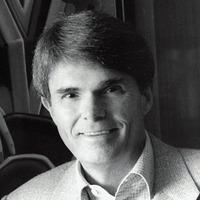
Dean Koontz
Dean Koontz

Renowned American author known for his suspense and horror novels. He has been writing since the 1970s and his works have been widely popular, winning numerous international awards. more

You May Also Like

“No matter what a person does to cover up and conceal themselves, when we write and lose control, I can spot a person from Alabama, Florida, South Carolina a mile away even if they make no exact reference to location. Their words are lush like the land they come from, filled with nine aunties, people named Bubba. There is something extravagant and wild about what they have to say — snakes on the roof of a car, swamps, a delta, sweat, the smell of sea, buzz of an air conditioner, Coca-Cola — something fertile, with a hidden danger or shame, thick like the humidity, unspoken yet ever-present. Often when a southerner reads, the members of the class look at each other, and you can hear them thinking, gee, I can't write like that. The power and force of the land is heard in the piece. These southerners know the names of what shrubs hang over what creek, what dogwood flowers bloom what color, what kind of soil is under their feet. I tease the class, "Pay no mind. It's the southern writing gene. The rest of us have to toil away.”

“As I wrote earlier, I see every human being as an eccentric to one degree or another. This can be true only if our assumption that there is a standard for normality is wrong. And I believe it is wrong. The human race is at the apex of all life-forms because, no matter how strenuously sociologist and politicians and others of their persuasion insist on defining our species into interest groups and factions and classes and tribes, the better to control us, in truth our greatest strength is in the uniqueness of each of us. Einstein, in his genius, can reveal to us much about the workings of the universe, and a child with Down syndrome can teach us, by his or her profound gentleness and humility, how urgently this troubled world needs kindness. Everyone has something to contribute.”

“Mary Jane she set at the head of the table, with Susan alongside of her, and said how bad the biscuits was, and how mean the preserves was, and how ornery and tough the fried chickens was—and all that kind of rot, the way women always do for to force out compliments; and the people all knowed everything was tiptop, and said so—said 'How do you get biscuits to brown so nice?' and 'Where, for the land's sake, did you get these amaz'n pickles?' and all that kind of humbug talky-talk, just the way people always does at a supper, you know.”

“While Mr Loveday aired my lady's sheets, I set to scratching up a supper. With not even time to change from my own damp clothes I had in one-half hour some welcoming tea steaming and hot brandy to mix a punch. Our bill of fare was the remnants of Mrs Garland's Yorkshire Pie, still sound and savory, fried bacon, and a hillock of roasted rabbits that disappeared as quickly as I made them. The last of the seed cake was eaten too, with a douse of brandy sprinkled over it to warm us. 'She will not eat those beggarly scraps,' said Jesmire, the spiteful old cat, when I took a tray of food to my lady's door. Yet I did see a slice of brandied cake disappear. I knew my mistress well enough by then, and she was a slave to her sugar tooth.”

“I call this our Thursday special. We have it regularly." This was a lie. In all the years not one single dish resembled another. Was this one from the deep green sea? Had that one been shot from blue summer air? Was it a swimming food or a flying food, had it pumped blood or chlorophyll, had it walked or leaned after the sun? No one knew. No one asked. No one cared. The most people did was stand in the kitchen door and peer at the baking-powder explosions, enjoy the clangs and rattles and bangs like a factory gone wild where Grandma stared half blindly about, letting her fingers find their way among canisters and bowls. Was she conscious of her talent? Hardly. If asked about her cooking, Grandma would look down at her hands which some glorious instinct sent on journeys to be gloved in flour, or to plumb disencumbered turkeys, wrist-deep in search of their animal souls. Her gray eyes blinked from spectacles warped by forty years of oven blasts and blinded with strewings of pepper and sage, so she sometimes flung cornstarch over steaks, amazingly tender, succulent steaks! And sometimes dropped apricots into meat loaves, cross-pollinated meats, herbs, fruits, vegetables with no prejudice, no tolerance for recipe or formula, save that at the final moment of delivery, mouths watered, blood thundered in response. Her hands then, like the hands of Great-grandma before her, were Grandma's mystery, delight, and life. She looked at them in astonishment, but let them live their life the way they must absolutely lead it.”