Quotessence
Home / Quotes / Quote by Wilkie Collins

Quote by Wilkie Collins

Work

The Moonstone

The Moonstone is a seminal work in the genre of detective fiction, featuring a series of intricate mysteries and a search for a stolen gemstone. The novel is renowned for its complex narrative structure and its exploration of themes such as colonialism and British identity. more
Author

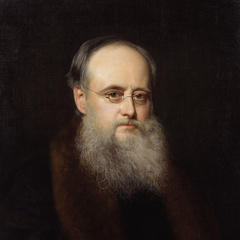
Wilkie Collins
Wilkie Collins

Wilkie Collins, born on January 8, 1824, and died on September 23, 1889, was a renowned British novelist. He is best known for his suspense and detective novels, being one of the pioneers of this literary genre. His works, such as 'The Woman in White' and 'The Moonstone', are particularly famous. more

You May Also Like

“Some people call that picturesque' said Sir Percival, pointing over the wide prospect with his half-finished walking-stick. 'I call it a blot on a gentleman's property. In my great-grandfather's time, the lake flowed to this place. Look at it now! It is not four feet deep anywhere, and it is all puddles and pools. I wish I could afford to drain it, and plant it all over. My bailiff (a superstitious idiot) says he is quite sure the lake has a curse on it, like the Dead Sea. What do you think, Fosco? It looks just the place for a murder, doesn't it?' 'My good Percival!' remonstrated the Count. 'What is your solid English sense thinking of? The water is too shallow to hide the body; and there is sand everywhere to print off the murderer's footsteps. It is, upon the whole, the very worst place for a murder that I ever set my eyes on.”

“The girl ginned again, more cheerfully than ever. 'Bless you, miss! Baxter's the keeper; and when he finds strange dogs hunting about, he takes and shoots 'em. It's keeper's dooty, miss. I think that dog will die. Here's where he's been shot, ain't it? That's Baxter's doings, that is. Baxter's doings, miss, and Baxter's dooty.' It was almost wicked enough to wish that Baxter had shot the housemaid instead of the dog.”

“The Moonstone is the first, the longest, and the best of modern English detective novels. But it is something more important than that; it is the best of all the novels written by that man who among the novelists of the nineteenth century was in every way the most closely associated with Charles Dickens. You cannot appreciate Collins without taking Dickens into account; and the work of Dickens after 1850 would not be what it is but for the reciprocal influence of Collins.”