“The Reader may here observe the Force of Numbers, which can be successfully applied, even to those things, which one would imagine are subject to no Rules. There are very few things which we know, which are not capable of being reduc'd to a Mathematical Reasoning, and when they cannot, it's a sign our Knowledge of them is very small and confus'd; and where a mathematical reasoning can be had, it's as great folly to make use of any other, as to grope for a thing in the dark when you have a Candle standing by you.”
Quote by John Arbuthnot
Author
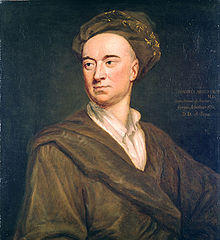
John Arbuthnot
John Arbuthnot, born on April 29, 1667, and died on February 27, 1735, was an influential British physician. He made significant contributions to the field of medicine, particularly in the areas of epidemiology and medical statistics. more
You May Also Like
Source: Matter and energy
Source: Mysticism and Logic and Other Essays: Top Philosophy Collections
Source: On aggression
Source: The Feynman Lectures on Physics, Vol. II: The New Millennium Edition: Mainly Electromagnetism and Matter
Source: The Principles of Science: A Treatise on Logic and Scientific Method