Quotessence
Home / Quotes / Quote by Fyodor Dostoevsky

Quote by Fyodor Dostoevsky

“Man, do not pride yourself on your superiority to the animals, for they are without sin, while you, with all your greatness, you defile the earth wherever you appear and leave an ignoble trail behind you -- and that is true, alas, for almost every one of us!”

Quote by Fyodor Dostoevsky

Work

Brothers Karamazov

Fyodor Dostoevsky's classic work delves into the complex relationships and internal conflicts of the Karamazov family, examining themes of faith, doubt, and redemption. more

Author

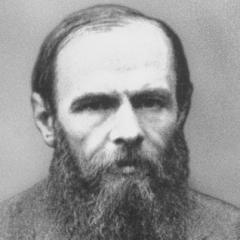
Fyodor Dostoevsky
Fyodor Dostoevsky

A renowned Russian novelist and a pioneer of psychological novels. His works deeply reveal the complexity of human nature and the injustice of society, having a profound impact on literature worldwide. more

You May Also Like

“I want you to break the spell. Finish it off.” "What do you mean?” "The spell you did on me and Dimitri.” "That spell is done. It burned itself out.” I shook my head. "No. I keep thinking about him. I keep wanting to…” He smiled knowingly when I didn't finish. "My dear, that was already there, long before I set that up.”

“Whatever is fitted in any sort to excite the ideas of pain and danger, that is to say, whatever is in any sort terrible, or is conversant about terrible objects, or operates in a manner analogous to terror, is a source of the sublime; that is, it is productive of the strongest emotion which the mind is capable of feeling... When danger or pain press too nearly, they are incapable of giving any delight, and are simply terrible; but at certain distances, and with certain modifications, they may be, and they are, delightful, as we every day experience.”

“I have stood aside to see the phantoms of those days go by me. They are gone, and I resume the journey of my story.’ (David Copperfield) “But all that night he lay awake because the phantoms of those days were not gone. Like the tiny, terrible holes in the prophylactics, the phantoms of those days were not easy to detect—and their meaning was unknown—but they were there.”