Quotessence
Home / Quotes / Quote by Jeremy Irons

Quote by Jeremy Irons

“I think nobody since has written such extraordinary work as Shakespeare writes. The characters he writes are full of inconsistencies, which is a great human quality - I mean we're all very inconsistent in the way we behave.”

Quote by Jeremy Irons

Author
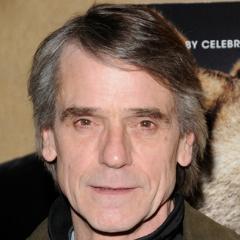
Jeremy Irons
Jeremy Irons

Jeremy Irons is a renowned British actor, born in September 1948. He is known for his exceptional acting skills and diverse roles, having won numerous awards, including an Academy Award, a Golden Globe, and a Tony Award. more

You May Also Like

“You look worldwide for the great leaders, and they're pretty thin on the ground, and of course the problem is unless you're squeaky, squeaky clean, something is going to come out of the cupboard. Most people aren't squeaky clean. Most people have fallen by the wayside once or twice in their lives, and because the world is so transparent now, I think they're very fearful of running for office. It's a huge shame, because often people who have really lived and are amazing people can be brought down by a past indiscretion.”

“I've always believed that the great strength of the Internet is that it allows us to communicate with each other, it allows debate. And I think that gay marriage is a huge step forward. But debate is throwing ideas about, and when it becomes sort of a weapon of character assassination, I think that's crazy. I think the situation in America is different from in England, where we have civil partnership, and now the vote on gay marriage has been carried, and whether it will go through Parliament I don't know.”

“Although the United States lost a quarter of a million men and women, civilians and soldiers, in World War II, that's considerably less than the Russians lost in soldiers at the Battle of Stalingrad alone. It's important to convey to countries and to people and to generations who have no experience of the 20th century as it was lived in Europe just how catastrophic it was.”

“It's important to remember that World War II was experienced very much as a continuity in that sense. Most of World War II in most of Europe wasn't a war; it was an occupation. The war was at the beginning and the end, except in Germany and the Soviet Union, and even there really only at the end. So the rest of time it's an occupation, which in some ways was experienced as an extension of the interwar period. World War II was simply an extreme form, in a whole new key, of the disruption of normal life that began in 1914.”

“The American financial and military commitment really only kicks in with Korea. Not that Korea was the real game for the Americans; their real fear was that this was just the prelude to a second Korea in Germany. We now know from the Soviet archives that the last thing Stalin was going to do was start a war in Central Europe. The Americans didn't know that, and it was the fear that he might which transformed NATO from a sort of shell game into a real military alliance. That total commitment basically transformed the Marshal Plan into military aid.”

“The Second World War had a precipitating effect in that it discredited the empires, as well as bankrupting them. Not only could you no longer, if you were a colonial subject of France in Africa, look to France as a model of power and influence and civility after what had happened in the war. Nor could the French any longer afford to run their empire. And nor could the British, although they were not discredited in the way that the French were.”