Quotessence
Home / Quotes / Quote by Stanislaw Lem

Quote by Stanislaw Lem

“The number of one's possible fantasies is inversely proportional to the amount of one's liquid assets. For him who has everything dreams are no longer possible.”

Quote by Stanislaw Lem

Work

Peace on Earth

This book delves into the multifaceted nature of peace on Earth, analyzing its significance across various historical periods and cultural contexts. It explores the philosophical underpinnings of peace, its role in different societies, and the challenges faced in achieving lasting harmony. The text provides a comprehensive overview of the concept, offering insights into its complexities and potential solutions. more
Author

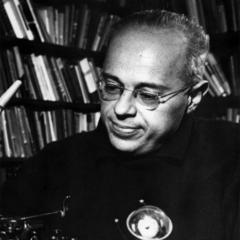
Stanislaw Lem
Stanislaw Lem

Stanislaw Lem was a Polish science fiction novelist, writer, and philosopher. His works are renowned for their profound philosophical insights and unique literary style, profoundly influencing science fiction literature. Lem's many novels, including 'Solaris', 'Soylent Green', and 'Fahrenheit 451', have won widespread readership and numerous literary awards, and have inspired many writers to come. more

You May Also Like

“Really, one of us ought to have the courage to call the experiment off and shoulder the responsibility for the decision, but the majority reckons that that kind of courage would be a sign of cowardice, and the first step in a retreat. They think it would mean an undignified surrender for mankind as if there was any dignity in floundering and drowning in what we don't understand and never will.”

“Each civilization may choose one of two roads to travel, that is, either fret itself to death, or pet itself to death. And in the course of doing one or the other, it eats its way into the Universe, turning cinders and flinders of stars into toilet seats, pegs, gears, cigarette holders and pillowcases, and it does this because, unable to fathom the Universe, it seeks to change that Fathomlessness into Something Fathomable.”

“Psychoanalysis provides truth in an infantile, that is, a schoolboy fashion: we learn from it, roughly and hurriedly, things that scandalize us and thereby command our attention. It sometimes happens, and such is the case here, that a simplification touching upon the truth, but cheaply, is of no more value than a lie. Once again we are shown the demon and the angel, the beast and the god locked in Manichean embrace, and once again man has been pronounced, by himself, not culpable.”

“Man's quest for knowledge is an expanding series whose limit is infinity, but philosophy seeks to attain that limit at one blow, by a short circuit providing the certainty of complete and inalterable truth. Science meanwhile advances at its gradual pace, often slowing to a crawl, and for periods it even walks in place, but eventually it reaches the various ultimate trenches dug by philosophical thought, and, quite heedless of the fact that it is not supposed to be able to cross those final barriers to the intellect, goes right on.”

“Science is turning into a monastery for the Order of Capitulant Friars. Logical calculus is supposed to supersede man as moralist. We submit to the blackmail of the 'superior knowledge' that has the temerity to assert that nuclear war can be, by derivation, a good thing, because this follows from simple arithmetic.”