“By doing his share in the associated activity, the individual appropriates the purpose which actuates it, becomes familiar with its methods and subject matters, acquires needed skill, and is saturated with its emotional spirit.”
Quote by John Dewey
Work
Democracy and Education - An Introduction to the Philosophy of Education
This book delves into the philosophical underpinnings of education, emphasizing the role of democracy in shaping educational environments and methodologies. It examines the relationship between democratic ideals and the development of knowledge and character in learners. more
Author
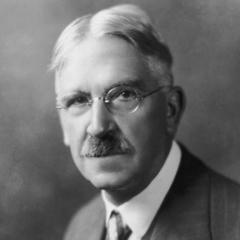
John Dewey
John Dewey was an American philosopher and educator, born on October 20, 1859, and died on June 1, 1952. He was a leading figure in the philosophy of pragmatism and had a profound impact on 20th-century education, philosophy, and the social sciences. more
You May Also Like
Source: Democracy And Education
Source: Democracy and Education: Top American Authors
Source: Democracy And Education
Source: Democracy and Education: Top American Authors
Source: Democracy And Education
Source: Democracy and Education: An Introduction to the Philosophy of Education
Source: Democracy And Education
Source: Democracy and Education - An Introduction to the Philosophy of Education