“More law, less justice.”
Quote by Marcus Tullius Cicero
Work
De Officiis Or on Duties on Obligations
Written by the Roman statesman and philosopher Marcus Tullius Cicero, De Officiis is a comprehensive examination of the ethical principles that govern human conduct. The work delves into the complexities of moral decision-making and the role of duty in the lives of individuals and societies. more
Author
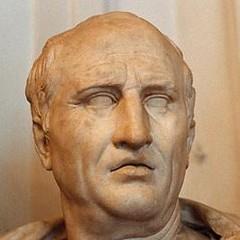
Marcus Tullius Cicero
Marcus Tullius Cicero was a prominent philosopher, politician, lawyer, orator, and writer during the late Roman Republic. The exact dates of his birth and death are unknown, but he was active in the 1st century BC. Known for his profound thoughts and exceptional literary style, Cicero has had a lasting impact on Western culture. more
You May Also Like
Source: The origin of life
“In natural science the principles of truth ought to be confirmed by observation.”
Source: Novum Organon Renovatum
Source: Hen's Teeth and Horse's Toes: Further Reflections in Natural History
“In the philosophic sense, observation shows and experiment teaches.”
Source: An Introduction to the Study of Experimental Medicine
Source: Under the apple trees
Source: The Essential Peirce, Volume 1: Selected Philosophical Writings? (1867–1893)
Source: Notes on Nursing: What it Is, and what it is Not