“I should . . . prefer swallowing one incomprehensibility rather than two. It requires one effort only to admit the single incomprehensibility of matter endowed with thought, and two to believe, first that of an existence called spirit, of which we have neither evidence nor idea, and then secondly how that spirit, which has neither extension nor solidity, can put material organs into motion.”
Quote by Thomas Jefferson
Work
The writings of Thomas Jefferson
This extensive compilation includes Jefferson's correspondence, his influential essays on topics such as democracy and individual rights, and his personal reflections on the founding of the United States. The writings provide insight into Jefferson's role in shaping American history and his contributions to the nation's political discourse. more
Author
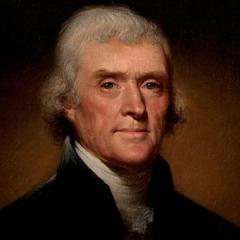
Thomas Jefferson
Thomas Jefferson was the third President of the United States, a distinguished politician, philosopher, architect, and scientist. He was born on April 13, 1743, and died on July 4, 1826. Jefferson advocated for democracy and freedom in politics and was one of the main authors of the Declaration of Independence. His political ideas had a profound impact on the founding and development of the United States. more
You May Also Like
“All theory is against free will; all experience is for it.”
Source: The collected works of Abraham Lincoln
“You are free to do what you want, but you are not free to want what you want.”
Source: Autobiography of Mark Twain, Volume 3: The Complete and Authoritative Edition
Source: The Works of Walter Bagehot ...
Source: The Myth of Sisyphus: And Other Essays
Source: Essays in Popular Philosophy: Top Essays
“I'm going to kill that god of yours, next. Then we'll see what you can do, and what you can't.”