“It has gradually become clear to me what every great philosophy up till now has consisted of—namely, the confession of its originator, and a species of involuntary and unconscious auto-biography; and moreover that the moral (or immoral) purpose in every philosophy has constituted the true vital germ out of which the entire plant has always grown. Indeed, to understand how the abstrusest metaphysical assertions of a philosopher have been arrived at, it is always well (and wise) to first ask oneself: "What morality do they (or does he) aim at?" Accordingly, I do not believe that an "impulse to knowledge" is the father of philosophy; but that another impulse, here as elsewhere, has only made use of knowledge (and mistaken knowledge!) as an instrument. But whoever considers the fundamental impulses of man with a view to determining how far they may have here acted as inspiring genii (or as demons and cobolds), will find that they have all practiced philosophy at one time or another, and that each one of them would have been only too glad to look upon itself as the ultimate end of existence and the legitimate lord over all the other impulses. For every impulse is imperious, and as such, attempts to philosophize.”
Quote by Friedrich Nietzsche
Book:Beyond Good and Evil
Work
Beyond Good and Evil
This book delves into the complexities of moral philosophy, questioning conventional moral values and advocating for a more nuanced understanding of human nature and societal norms. more
Author
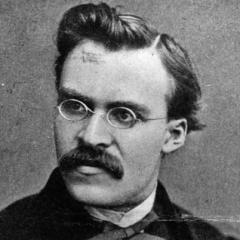
Friedrich Nietzsche
Friedrich Nietzsche was a German philosopher, cultural critic, poet, and writer whose works have had a profound impact on subsequent philosophy, literature, and thought. His ideas revolve around concepts such as the 'will to power', the 'Übermensch', and the 'eternal recurrence'. more
You May Also Like
“Education and teachers, Both are the backbone of the nation. - Somen Kanungo, Founder, DEC”
Source: Supreme Court and Appellate Advocacy: Mastering Oral Argument
Source: Notorious RBG: The Life and Times of Ruth Bader Ginsburg
“a court ought not be affected by the weather of the day it will be by the climate of the era”
Source: My Own Words
Source: Ruth Bader Ginsburg: In Her Own Words
Source: Ruthless People
Source: The Grim Reaper