Quotessence
Home / Quotes / Quote by Katherine Howe

Quote by Katherine Howe

“Rather that being an aberrant expression of North American fears and attitudes about witchcraft, it should be instead be seen as the ultimate expression of it. And therein lies the most alarming aspect of the Salem witch crisis- if Salem is not aberrant then it cannot be comfortably consigned to the past.”

Quote by Katherine Howe

Work

The Penguin Book of Witches

Browse quotes and source details for this work. more

Author
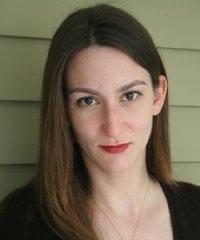
Katherine Howe
Katherine Howe

Katherine Howe is an American novelist known for her skillful blend of history and the supernatural. Born in 1977, she graduated from Harvard University with a dual degree in English literature and religious studies. Howe's works are typically set against the backdrop of American history and explore mysterious and supernatural phenomena, which have won her a wide audience. more

You May Also Like

“People gave the heavens a voice, so they had something to ask for: a better harvest, a healthy child or a milder winter. God was hope, and mankind needed hope the way it needed warmth, food and ale. But with hope came disappointment. The downtrodden yearned for stories to explain their misfortunes, though what they really wanted was somebody to blame for their misery. It was impossible to set fire to the blight that had ruined your crops, but a blight was easily summoned by a witch, at which point any poor woman would do.”

“It all makes you wonder what you would've done had you been kicking around back then. If a teen girl, would you have followed the herd? If the mother of eight dead babies like Ann Putnam Sr., would you have given yourself a few hard bruises and then gleefully joined in the accusing because what else could explain your misfortunes? If you were a judge and "It" Puritan Cotton Mather, would you have ridden all the way out from Cambridge to see for yourself just what in the heck was going on in Salem Village? Would you have allowed into evidence proof from both this world and the invisible one into which only the purest heart can see?”

“There were too many theories, and none of them seemed to be based in any kind of reality. Most seemed to be struck on the idea that Extraordinaries were born and not made. If that were the case, Nick was screwed even before he got started. And since that wouldn't do, he chose not to believe it. Besides, it smacked of pure-blood bullshit, and Nick wasn't here for that at all.”

“Origin stories are like birthday parties: very exciting and colorful and noisy; but in the end, they’re all the same. Anticipation sizzles around for weeks before the Big Day, but when it comes, your shindig looks pretty much like the little one Peter had last month. That’s an order of operations: take off your coats, pin the tail on the donkey, infection, singing, cake, mutation, balloon, gifts, branding, maybe a magician or a clown, exhaustion, and a bag of toys to take home. You’re the same person today as yesterday. You just got a really big present and a shiny new hat to wear.”

“Thus Adelaide Lee was born of poor luck and poverty and raised by ignorance and solitude. Let this ignoble origin story stand as an invaluable lesson to you that a person’s beginnings do not often herald their endings, for Adelaide Lee did not grow into another pale Larson woman. She became something else entirely, something so radiant and wild and fierce that a single world could not contain her, and she was obliged to find others.”

“Stateless Sonnet Some dreams are too big for a town, Some dreams are too big for a city. My dream was too big for one country, So I stood up and engulfed humanity. I am too alive to be bound by ideology, I am too human to be bound by border. Too civilized to pledge flagly allegiance, I am the ultimate geopolitical defector. In poetry I am sufi, In philosophy I am advaitin. In duty I am scientist, In existence I am human. I am a civilized human being, I don't exist to impress governments. I'm a being with heart, brain 'n backbone, I'm the stateless force of world upliftment.”

“La razón por la que puede ser prudente desconfiar del juicio político de los científicos no es fundamentalmente su falta de carácter—que n o se negaran a desarrollar armas atómicas—o su ingenuidad—que no entendieran que una vez desarrolladas dichas armas serían los últimos en ser consultados sobre su empleo—, sino concretamente el hecho de que se mueven en un mundo donde el discurso ha perdido su poder.”