Quotessence
Home / Quotes / Quote by Isadora Duncan

Quote by Isadora Duncan

“The movement of the waves, of winds, of the earth is ever in the same lasting harmony. We do not stand on the beach and inquire of the ocean what was its movement of the past and what will be its movement of the future. We realize that the movement peculiar to its nature is eternal to its nature. The dancer of the future will be one whose body and soul have grown so harmoniously together that the natural language of that soul will have become the movement of the body.”

Quote by Isadora Duncan

Author
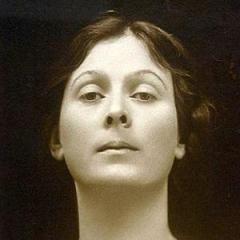
Isadora Duncan
Isadora Duncan

Isadora Duncan, born on May 27, 1877, and died on September 14, 1927, was a pioneer of modern dance. She is known for her free and expressive dance style, which broke away from the constraints of classical ballet and laid the foundation for modern dance. more

You May Also Like

“How many leaps did Nijinksy take before he made the one that startled the world? He took thousands and thousands and it is that legend that gives us the courage, the energy, and arrogance to go back into the studio knowing that while there is so little time to be born to the instant, you will work again among the many that you may once more be born as one. That is a dancer's world.”

“It takes about ten years to make a mature dancer. The training is twofold. There is the study and practice of the craft in order to strengthen the muscular structure of the body. The body is shaped, disciplined, honored, and in time, trusted. The movement become clean, precise, eloquent, truthful. Movement never lies. It is a barometer telling the state of the soul's weather to all who can read it. This might be called the law of the dancer's life, the law which governs its outer aspects”

“Dancing of late years has been degraded to the narrow limits and low professionalism of mere mechanical proficiency, associated with the most frivolous... phases of the stage. But this day is fading...We are turning our gaze inward, learning to seek there the divine sources of the dance, to the end that it may flower into new and more glorious forms of beauty and wealth”