“Ignorance, when it is voluntary, is criminal; and he may be properly charged with evil who refused to learn how he might prevent it.”
Quote by Samuel Johnson
Work
The works of Samuel Johnson
This compilation encompasses a wide array of works by Samuel Johnson, a prominent figure in the English literary tradition. It includes his seminal work 'A Dictionary of the English Language,' as well as essays, poems, and biographical writings. Johnson's works are celebrated for their wit, scholarly depth, and influence on the English language. more
Author
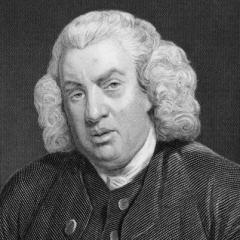
Samuel Johnson
Samuel Johnson was an English writer, poet, and lexicographer, renowned for his comprehensive English dictionary, 'A Dictionary of the English Language', published in 1755. His distinctive writing style and wit have cemented his place as a significant figure in the history of English literature. more
You May Also Like
Source: The Rambler: A Periodical Paper, Published in 1750, 1751, 1752
Source: Works
“Why does everyone have to pretend to be stupid and not know long words?”
Source: The Works of Thomas Jefferson: Correspondence and Papers, 1816-1826
“I wish you would read a little poetry sometimes. Your ignorance cramps my conversation.”
Source: Complete Works Of George Eliot