Quotessence
Home / Quotes / Quote by Fanny Kemble

Quote by Fanny Kemble

“The whole gamut of good and evil is in every human being, certain notes, from stronger original quality or most frequent use, appearing to form the whole character; but they are only the tones most often heard. The whole scale is in every soul, and the notes most seldom heard will on rare occasions make themselves audible.”

Quote by Fanny Kemble

Author
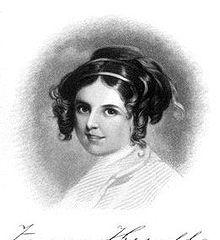
Fanny Kemble
Fanny Kemble

Fanny Kemble was a distinguished 19th-century English actress and writer. Born on November 27, 1809, and passing away on January 15, 1893, she was renowned for her acting prowess and literary contributions. Kemble's career on the stage was marked by her remarkable performances in Shakespearean and contemporary plays, and her transition to writing after her retirement from acting resulted in several notable works, including memoirs that offered a unique perspective on the life of an actress in the 19th century. She was also a vocal advocate for social and political issues, including women's rights and the abolition of slavery. more

You May Also Like

“The large and rapid fortunes by which vulgar and ignorant people become possessed of splendid houses, splendidly furnished, do not of course, give them the feelings and manners of gentle folks.”

“Though the Negroes are fed, clothed, and housed, and though the Irish peasant is starved, naked, and roofless, the bare name of freemen-the lordship over his own person, the power to choose and will-are blessings beyond food, raiment, or shelter; possessing which, the want of every comfort of life is yet more tolerable than their fullest enjoyment without them.”

“A good many causes tend to make good masters and mistresses quite as rare as good servants.... The large and rapid fortunes by which vulgar and ignorant people become possessed of splendid houses, splendidly furnished, do not, of course, give them the feelings and manners of gentle folks, or in any way really raise them above the servants they employ, who are quite aware of this fact, and that the possession of wealth is literally the only superiority their employers have over them.”

“The Emperor Constantine, who lifted Christianity into power, murdered his wife Fausta, and his eldest son Crispus, the same year that he convened the Council of Nice to decide whether Jesus Christ was a man or the Son of God. The council decided that Christ was consubstantial with the father. This was in the year 325. We are thus indebted to a wife-murderer for settling the vexed question of the divinity of the Savior.”

“It is incredible that only idiots are absolutely sure of salvation. It is incredible that the more brain you have the less your chance is. There can be no danger in honest thought, and if the world ever advances beyond what it is to-day, it must be led by men who express their real opinions.”

“All the martyrs in the history of the world are not sufficient to establish the correctness of an opinion. Martyrdom, as a rule, establishes the sincerity of the martyr, - never the correctness of his thought. Things are true or false in themselves. Truth cannot be affected by opinions; it cannot be changed, established, or affected by martyrdom. An error cannot be believed sincerely enough to make it a truth.”