“What I have said about the newspapers and the movies applies equally to the radio, to television, and even to bookselling. Thus we are in an age where the enormous per capita bulk of communication is met by an ever-thinning stream of total bulk of communication. More and more we must accept a standardized inoffensive and insignificant product which, like the white bread of the bakeries, is made rather for its keeping and selling properties than for its food value. This is fundamentally an external handicap of modern communication, but it is paralleled by another which gnaws from within. This is the cancer of creative narrowness and feebleness. In the old days, the young man who wished to enter the creative arts might either have plunged in directly or prepared himself by a general schooling, perhaps irrelevant to the specific tasks he finally undertook, but which was at least a searching discipline of his abilities and taste. Now the channels of apprenticeship are largely silted up. Our elementary and secondary schools are more interested in formal classroom discipline than in the intellectual discipline of learning something thoroughly, and a great deal of the serious preparation for a scientific or a literary course is relegated to some sort of graduate school or other.”
Quote by Norbert Wiener
Work
This book examines the concept of cybernetics—the science of communication and control in machines and living organisms—and applies it to human society. The author discusses how information theory and feedback loops influence social structures, governance, and individual autonomy. It argues that understanding these principles is essential for using technology and knowledge in ways that enhance human dignity and freedom, rather than diminishing them. The text reflects mid-20th-century concerns about automation, control systems, and the ethical responsibilities of humans in an increasingly interconnected world. more
Author
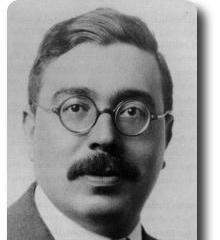
Norbert Wiener, born on November 26, 1894, and died on March 18, 1964, was an American mathematician and a founding figure in the field of cybernetics. Known as the 'father of the information age,' Wiener made significant contributions to mathematics, physics, and engineering, particularly in the areas of stochastic processes, Fourier analysis, and control theory. more
You May Also Like
“Ce sont toujours les dominants qui fixent le niveau de la violence dans l'histoire.”