“Friendship is far more delicate than love. Quarrels and fretful complaints are attractive in the last, offensive in the first. And the very things which heap fewel on the fire of ardent passion, choke and extinguish sober and true regard. On the other hand, time, which is sure to destroy that love of which half certainly depends on desire, is as sure to increase a friendship founded on talents, warm with esteem, and ambitious of success for the object of it.”
Quote by Hester Lynch Piozzi
Work
The Intimate Letters of Piozzi and Pennington
This book presents a selection of personal letters exchanged between the two individuals, offering insights into their personal lives and the social context of their time. more
Author
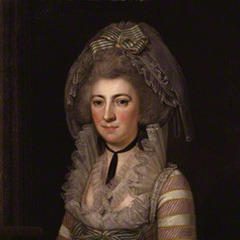
Hester Lynch Piozzi
Hester Lynch Piozzi was an English author renowned for her witty and observant diaries. Born on January 27, 1741, and passing away on May 2, 1821, Piozzi's writing offers a unique glimpse into 18th-century British society, capturing its social customs and intellectual trends. more
You May Also Like
“... one should know the value of Life better than to pout any part of it away.”
Source: The Intimate Letters of Piozzi and Pennington
“Winston Churchill - fifty per cent genius, fifty per cent bloody fool.”
“The power is to set the agenda. What we print and what we don't print matter a lot.”
“To me, working is a form of sustenance, like food or water, and nearly as essential.”
Source: Personal History
Source: Katharine Graham's Washington
Source: Katharine Graham's Washington
Source: Backlash: the undeclared war against American women
Source: Backlash: the undeclared war against American women
Source: Backlash: the undeclared war against American women