Quotessence
Home / Quotes / Quote by Francis Crick

Quote by Francis Crick

“I think she [Rosalind Franklin] was a good experimentalist but certainly not of the first rank. She was simply not in the same class as Eigen or Bragg or Pauling, nor was she as good as Dorothy Hodgkin. She did not even select DNA to study. It was given to her. Her theoretical crystallography was very average.”

Quote by Francis Crick

Author
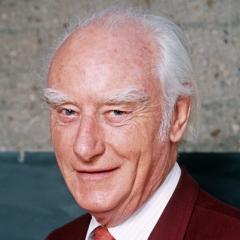
Francis Crick
Francis Crick

Francis Crick was a renowned scientist known for his significant contributions to the field of molecular biology. He, along with James Watson, was awarded the Nobel Prize in Physiology or Medicine in 1962 for their discovery of the double-helix structure of DNA. Crick's research had a profound impact on understanding the transmission of genetic information and the genetic basis of organisms. more

You May Also Like

“Knowledge is like a knife. In the hands of a well-balanced adult it is an instrument for good of inestimable value; but in the hands of a child, an idiot, a criminal, a drunkard or an insane man, it may cause havoc, misery, suffering and crime. Science and religion have this in common, that their noble aims, their power for good, have often, with wrong men, deteriorated into a boomerang to the human race.”

“Of agitating good roads there is no end, and perhaps this is as it should be, but I think you'll agree that it is high time to agitate less and build more. [Here is] a plan whereby the automobile industry of America can build a magnificent "Appian Way" from New York to San Francisco, having it completed by May 1, 1915 and present it to the people of the United States.”

“The chemists work with inaccurate and poor measuring services, but they employ very good materials. The physicists, on the other hand, use excellent methods and accurate instruments, but they apply these to very inferior materials. The physical chemists combine both these characteristics in that they apply imprecise methods to impure materials.”

“The specific goals we set for ourselves are almost always subsidiary to our long range intentions. A good parent, a good neighbour, a good citizen, is not good because his specific goals are acceptable, but because his successive goals are ordered to a dependable and socially desirable set of values. (1947)”