Quotessence
Home / Quotes / Quote by Ian Curtis

Quote by Ian Curtis

“Reality is only a dream, based on values and well worn principles, whereas the dream goes on forever.”

Quote by Ian Curtis

Author
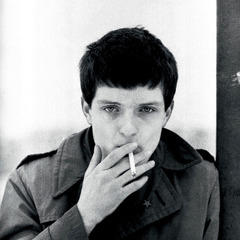
Ian Curtis
Ian Curtis

Ian Curtis, a British musician born on July 15, 1956, and died on May 18, 1980. He was the lead singer of the iconic band Joy Division, known for his distinctive voice and profound lyrics. more

You May Also Like

“Today.” Cas reached between us, curling his fingers under my chin. He brought my gaze to his. “It turned midnight just as I arrived. April 20th. Your birthday.” (...) Cas smiled. Just one dimple was visible, and that surprise gave way to a sweet rise of love, so much love that it almost hurt for my heart to be so full of it. “You remembered,” I whispered. “Apparently, someone had to,” he teased, sweeping his thumb over my cheek. His eyes fixed on mine. “And I would never forget, Poppy. I will be with you for each and every birthday.”

“From a letter to Barrett H.Clark, 4 May 1918(LL,II,pp.204-5): "my attitude to subjects and expressions, the angles of vision, my methods of composition will, within limits, be always changing--not because I am unstable or unpricipled but because I am free. Or perhaps it may be more exact to say, because I am always trying for freedom--within my limits...A work of art is seldom limited to one exclusive meaning and not necessarily tending to a definite conclusion. And this for the reason that the nearer it approaches art, the more it acquires a symbolic character.”

“Even more essential, however, is the identification of the individuals in the masses with the "führer." The more helpless the "mass-individual" has become, owing to his upbringing, the more pronounced is his identification with the führer, and the more the childish need for protection is disguised in the form of a feeling at one with the führer. This inclination to identify is the psychological basis of national narcissism, i.e., of the self-confidence that individual man derives from the "greatness of the nation." The reactionary lower middle-class man perceives himself in the führer, in the authoritarian state. On the basis of this identification he feels himself to be a defender of the "national heritage," of the "nation," which does not prevent him, likewise on the basis of this identification, from simultaneously despising "the masses" and confronting them as an individual. The wretchedness of his material and sexual situation is so overshadowed by the exalting idea of belonging to a master race and having a brilliant führer that, as time goes on, he ceases to realize how completely he has sunk to a position of insignificant, blind allegiance. The worker who is conscious of his skills—he, in short, who has rid himself of his submissive structure, who identifies with his work and not with the führer, with the international working masses and not with the national homeland—represents the opposite of this. He feels himself to be a leader, not on the basis of his identification with the führer, but on the basis of his consciousness of performing work that is vitally necessary for society's existence.”