Quotessence
Home / Quotes / Quote by Joseph Conrad

Quote by Joseph Conrad

“Fiction, at the point of development at which it has arrived, demands from the writer a spirit of scrupulous abnegation.The only legitimate of all the irreconcilable antagonisms that make our life so enigmatic, so burdensome, so fascinating, so dangerous--so full of hope. They exist! And this is the only fundamental truth of fiction.”

Quote by Joseph Conrad

Author
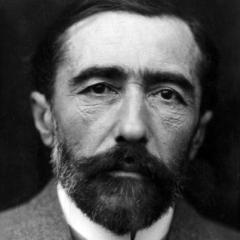
Joseph Conrad
Joseph Conrad

Joseph Conrad, born on December 3, 1857 in Poland and died on August 3, 1924 in the United Kingdom, was a renowned British author of the late 19th and early 20th centuries. He is known for his profound descriptions of maritime life and his insightful explorations of human nature. more

You May Also Like

“Even more essential, however, is the identification of the individuals in the masses with the "führer." The more helpless the "mass-individual" has become, owing to his upbringing, the more pronounced is his identification with the führer, and the more the childish need for protection is disguised in the form of a feeling at one with the führer. This inclination to identify is the psychological basis of national narcissism, i.e., of the self-confidence that individual man derives from the "greatness of the nation." The reactionary lower middle-class man perceives himself in the führer, in the authoritarian state. On the basis of this identification he feels himself to be a defender of the "national heritage," of the "nation," which does not prevent him, likewise on the basis of this identification, from simultaneously despising "the masses" and confronting them as an individual. The wretchedness of his material and sexual situation is so overshadowed by the exalting idea of belonging to a master race and having a brilliant führer that, as time goes on, he ceases to realize how completely he has sunk to a position of insignificant, blind allegiance. The worker who is conscious of his skills—he, in short, who has rid himself of his submissive structure, who identifies with his work and not with the führer, with the international working masses and not with the national homeland—represents the opposite of this. He feels himself to be a leader, not on the basis of his identification with the führer, but on the basis of his consciousness of performing work that is vitally necessary for society's existence.”

“Finally, we arrive at the question of the so-called nonpolitical man. Hitler not only established his power from the very beginning with masses of people who were until then essentially nonpolitical; he also accomplished his last step to victory in March of 1933 in a "legal" manner, by mobilizing no less than five million nonvoters, that is to say, nonpolitical people. The Left parties had made every effort to win over the indifferent masses, without posing the question as to what it means "to be indifferent or nonpolitical." If an industrialist and large estate owner champions a rightist party, this is easily understood in terms of his immediate economic interests. In his case a leftist orientation would be at variance with his social situation and would, for that reason, point to irrational motives. If an industrial worker has a leftist orientation, this too is by all mean rationally consistent—it derives from his economic and social position in industry. If, however, a worker, an employee, or an official has a rightist orientation, this must be ascribed to a lack of political clarity, i.e., he is ignorant of his social position. The more a man who belongs to the broad working masses is nonpolitical, the more susceptible he is to the ideology of political reaction. To be nonpolitical is not, as one might suppose, evidence of a passive psychic condition, but of a highly active attitude, a defense against the awareness of social responsibility. The analysis of this defense against consciousness of one's social responsibility yields clear insights into a number of dark questions concerning the behavior of the broad nonpolitical strata. In the case of the average intellectual "who wants nothing to do with politics," it can easily be shown that immediate economic interests and fears related to his social position, which is dependent upon public opinion, lie at the basis of his noninvolvement. These fears cause him to make the most grotesque sacrifices with respect to his knowledge and convictions. Those people who are engaged in the production process in one way or another and are nonetheless socially irresponsible can be divided into two major groups. In the case of the one group the concept of politics is unconsciously associated with the idea of violence and physical danger, i.e., with an intense fear, which prevents them from facing life realistically. In the case of the other group, which undoubtedly constitutes the majority, social irresponsibility is based on personal conflicts and anxieties, of which the sexual anxiety is the predominant one. […] Until now the revolutionary movement has misunderstood this situation. It attempted to awaken the "nonpolitical" man by making him conscious solely of his unfulfilled economic interests. Experience teaches that the majority of these "nonpolitical" people can hardly be made to listen to anything about their socio-economic situation, whereas they are very accessible to the mystical claptrap of a National Socialist, despite the fact that the latter makes very little mention of economic interests. [This] is explained by the fact that severe sexual conflicts (in the broadest sense of the word), whether conscious or unconscious, inhibit rational thinking and the development of social responsibility. They make a person afraid and force him into a shell. If, now, such a self-encapsulated person meets a propagandist who works with faith and mysticism, meets, in other words, a fascist who works with sexual, libidinous methods, he turns his complete attention to him. This is not because the fascist program makes a greater impression on him than the liberal program, but because in his devotion to the führer and the führer's ideology, he experiences a momentary release from his unrelenting inner tension. Unconsciously, he is able to give his conflicts a different form and in this way to "solve" them.”

“This idealization of motherhood is essentially a means of keeping women from developing a sexual consciousness and from breaking through the barriers of sexual repression, of keeping alive their sexual anxieties and guilt feelings. The very existence of woman as a sexual being would threaten authoritarian ideology; her recognition and social affirmation would mean its collapse.”

“The institution of marriage would be damaged. Ideologically, marital morality must be kept intact, in spite of the contradictory facts of sexual life, because marriage is the backbone of the authoritarian family, which in turn is the breeding ground for authoritarian ideologies and character structure.”

“Die Unzulänglichkeiten ihres Herkunftsmilieus [der Arbeiterschaft], sich in Sprache und Kultur der mittleren und höheren Schichten ausdrücken zu können, erschwerten ihren Aufstieg – und trugen dazu bei, dass sich die sozialen Parvenüs oft geradezu demonstrativ nach unten abgrenzten, um in der Lebenswelt oben willkommen geheißen zu werden. Wohl auch deshalb nahm der spätere Bundeskanzler Schröder den Brioni so wichtig. Störend dabei war, dass der Übereifer in der Adaption der neuen Lebensmaximen die frühere soziale Inferiorität erst recht offenlegte und so auf die Unsicherheit im Stil hinwies; hier machte sich eine von den traditionellen Eliten robust errichtete Sperre bemerkbar, welche die social climbers trotz – besser: gerade wegen – ihres angestrengten Tuns nicht überwinden konnten.”

“So blieb [den individuellen Aufsteigern aus dem Arbeitermilieu] allein die Imitation der Verhaltensweisen und Ideologien von der mindestens heimlich bewunderten privilegierten Schicht, in die einzutreten schließlich Ziel des langen Weges war. Doch das Original mag den Nachahmer nicht, verhält sich bestenfalls gönnerhaft-spöttisch, von oben herab. Der Kopierende gibt sich alle erdenkliche Mühe, wird oft gar zum aggressiven Apologeten des Vorbildes, was – so Norbert Elias – »zu ganz spezifischen Verkrümmungen des Bewußtseins und der Haltung« führt. Der sozialdemokratische Kotau vor den Imperativen der Privatisierung, der finanzkapitalistischen Entgrenzungen, der Steuerbefreiung für Kapitalinvestoren in den Jahren 1999-2005 – er mag damit zu tun haben.”

“Speakers for the Social Democratic party provided me with much food for thought. They attacked the whole capitalistic system, showed how its different units combined to exploit the producing masses to the nth degree, and how the distorted or suppressed news to protect this system, of which it was a part. Being loyal to the press, my first reaction to this denunciation was one of resentment, though I had to concede that some of the charges were true.”

“Prior to January 22, 1905, the revolutionary party of Russia consisted of a small handful of people, and the reformists of those days, derisively called us a 'sect'. Within a few months, however, the picture completely changed. The hundreds of revolutionary Social Democrats 'suddenly' grew into thousands; the thousands became leaders of between two and three million proletarians.”