Quotessence
Home / Quotes / Quote by Samantha Hunt

Quote by Samantha Hunt

Work

The Invention of Everything Else

This book is a fictional narrative that delves into the life of an inventor known for his peculiar inventions and his relentless pursuit of love and acclaim. The story is set against the backdrop of the early 20th century and offers a glimpse into the inventor's creative genius and personal struggles. more

Author
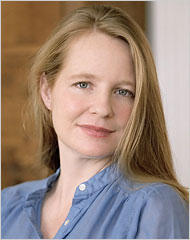
Samantha Hunt
Samantha Hunt

Samantha Hunt is an American novelist born in 1971. Her works are known for their unique narrative style and profound insights into historical events. more

You May Also Like

“There is a widespread belief that americans hate cities. I think it is probable that Americans hate city failure, but, from the evidence, we certainly do not hate successful and vital city areas. On the contrary, so many people want to make use of such places, so many people want to work in them or live in them or visit in them, that municipal self-destruction ensues. In killing successful diversity combinations with money, we are employing perhaps our nearest equivalent to killing with kindness.”

“The charm of a city, now we come to it, is not unlike the charm of flowers. It partly depends on seeing time creep across it. Charm needs to be fleeting. Nothing could be less palatable than a museum-city propped up by prosthetic devices of concrete. Paris is not in danger of becoming a museum-city, thanks to the restlessness and greed of promoters. Yet their frenzy to demolish everything is less objectionable than their clumsy determination to raise housing projects that cannot function without the constant presence of an armed police force… All these banks, all these glass buildings, all these mirrored facades are the mark of a reflected image. You can no longer see what’s happening inside, you become afraid of the shadows. The city becomes abstract, reflecting only itself. People almost seem out of place in this landscape. Before the war, there were nooks and crannies everywhere. Now people are trying to eliminate shadows, straighten streets. You can’t even put up a shed without the personal authorization of the minister of culture. When I was growing up, my grandpa built a small house. Next door the youth club had some sheds, down the street the local painter stored his equipment under some stretched-out tarpaulin. Everybody added on. It was telescopic. A game. Life wasn’t so expensive — ordinary people would live and work in Paris. You’d see masons in blue overalls, painters in white ones, carpenters in corduroys. Nowadays, just look at Faubourg Sainte-Antoine — traditional craftsmen are being pushed out by advertising agencies and design galleries. Land is so expensive that only huge companies can build, and they have to build ‘huge’ in order to make it profitable. Cubes, squares, rectangles. Everything straight, everything even. Clutter has been outlawed. But a little disorder is a good thing. That’s where poetry lurks. We never needed promoters to provide us, in their generosity, with ‘leisure spaces.’ We invented our own. Today there’s no question of putting your own space together, the planning commission will shut it down. Spontaneity has been outlawed. People are afraid of life.”

“Planners, architects of city design, and those they have led along with them in their beliefs are not consciously disdainful of the importance of knowing how things work. On the contrary, they have gone to great pains to learn what saints and sages of modern orthodox planning have said about how cities ought to work and what ought to be good for people and business in them. They take this with such devotion that when contradictory reality intrudes, threatening tho shatter their dearly won learning, they must shrug reality aside.”

“From the time I arrived in British East Africa at the indifferent age of four and went through the barefoot stage of early youth hunting wild pig with the Nandi, later training racehorses for a living, and still later scouting Tanganyika and the waterless bush country between the Tana and Athi Rivers, by aeroplane, for elephant, I remained so happily provincial I was unable to discuss the boredom of being alive with any intelligence until I had gone to London and lived there for a year. Boredom, like hookworm, is endemic.”