Quotessence
Home / Quotes / Quote by Romain Gary

Quote by Romain Gary

“Look here, my friend, for three years I was a bus conductor in Paris. I recommend it during rush hours; it gave me what you might call a knowledge of human nature — a good, solid knowledge which prompted me to change sides and go over to the elephants. I hope that’ll do for you, as an explanation.”

Quote by Romain Gary

Work

The Roots of Heaven

Browse quotes and source details for this work. more

Author

Romain Gary
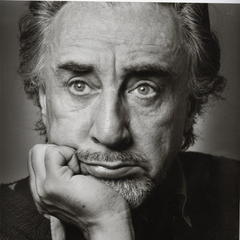
Romain Gary

Romain Gary, born on May 21, 1914, in Lithuania, and died on December 2, 1980, in France, was a distinguished diplomat and a versatile writer. He is renowned for his successful diplomatic career and literary achievements. more

You May Also Like

“As I say, I knew him well: it was I who, twenty years before, had got him his first scholarship in Paris. I had several times, in those distant days, sent him money taken from my own meager pay, in response to pressing letters, and of course he had never forgiven me for that. I did not blame him: I preferred ingratitude to servility. Later — much later — he had toured my territory as a member of Parliament and, on his return to Brazzaville, had had a great deal to say about me: apparently, I wasn’t doing anything to ‘free the backward tribes from the servitude of the past/ In that, too, he was right: I am in no hurry to do so. On the contrary, I have a more and more irresistible longing not only to preserve intact the customs and rites of the African forest, but sometimes even to share in them myself.”

“Behind him stood Wa’itari, who believed that a new world war was imminent and who expected to appear after the fall of Europe, as the first hero of Pan-African nationalism. Behind them stood, as in the shadow of all great causes, mere bandits and murderers, as a pledge of earthly triumph. Behind them again, the silent awakening mass of the black peoples whose hour was striking, whatever happened. Behind them again, very far behind, and perhaps only in Morel’s heart, came the elephants. 'It was in fact a great cause, with the company a great cause always keeps: men of good will and those who exploit them, generous endeavor and sordid calculations, an ideal over the horizon, but also the treachery of ends justifying means. Man’s oldest company, I tell you, a noble cause and a pack of scoundrels behind it, a generous dream and all the purity that’s needed to cause great massacres ...”

“Well, I’m damned,' cried the student in exasperation. 'Do for once answer me directly, instead of sliding out of everything! Are you for the liberty of the people, yes or no?' Morel had instinctively opened his mouth to reply but stopped in time. It wasn’t worth it. If they still hadn’t understood, it was because they hadn’t got it in them. You either have or haven't. They weren't the only ones who had not. Obviously, humanity was not capable of respecting that elbow room, that margin, if civilization was not willing to burden itself with the elephants among other difficulties. If society insisted on considering this margin a luxury — well! Man himself would in the end become a useless luxury.”

“I’m coming round to the belief that colonialism hasn’t been a harsh enough school for them, that it hasn’t taught them enough about things — that French colonialism has, in spite of everything, treated nature with a certain respect. They’ve still got a lot to learn, and French people don’t give that kind of lesson. The men of their own race will take care of that. One day they’ll have their Stalins, their Hitlers, and their Napoleons, their Fuhrers and their Duces, and then their very blood will cry out to demand respect for nature. That day they will understand.”

“All who come to me with help are welcome. Nationalism, you know — whether it's white hunters or black hunters, the old ones or the new ones — I’m against 'em all. I'm on the side of anyone who will take the necessary steps.' [...] He added as if incidentally, 'I was in the Resistance, during the Occupation. I fought not so much to defend France against Germany, but to defend elephants against hunters.”

“Morel is afflicted with too noble a conception of man. He demands too much of human beings, and he refiLses to compromise. You can’t live with that inside you. It becomes almost a question of physiology. What he calls for is not even moral progress; it's really a biological mutation. He can’t accept the very biological limitations which make us what we are — weak, crawling in our mud, and totally devoid of dignity. That's the iron law he’s protesting, the law he refuses to submit to.”

“Critical play means to create or occupy play environments and activities that represent one or more questions about aspects of human life . . . . Criticality in play can be fostered in order to question an aspect of a game’s 'content,' or an aspect of a play scenario’s function that might otherwise be considered a given or necessary.”