“In fact, the child is no longer a child. Children are substitute beings, who are losing their natural otherness and entering upon a satellite existence on the artificial orbit of sameness. They will find it increasingly difficult to detach themselves; to find, not their identity and their autonomy — as they are constantly being told they must — but their distance and their strangeness. The more genetic heredity is foregrounded, the more the symbolic heritage disappears. Even the Oedipal drama is not played out any longer. There is no longer any resolution of childhood, since the psychical and symbolic conditions of childhood no longer even exist. Childhood is losing even the chance of surpassing and denying itself as such. It is disappearing as a phase in the metamorphosis of the human being. At the same time as it is losing this distinctive spirit of its own and its singularity, it is becoming a sort of dark continent. For otherness inevitably re-emerges, but differently, in the form of a vast, shady complicity on the part of a generation which is at last free from adult attention, but is no longer minded to grow up. An endless, purposeless adolescence, which is acquiring autonomy with no reference to the Other, acquiring it for itself — and turning, in some cases violently, against the Other, against the adult with whom it now has no sense either of descendance or solidarity. This is no longer a symbolic break, but a pure and simple rejection, which may find expression in a lethal 'acting out' . And it is not even 'acting out' , since that still presupposes the irruption of the phantasm into a real world , whereas here we are dealing with an infantile, quasi-hallucinatory state which reaches back before the reality principle. Moreover, this pre-reality-principle, infantile state coincides strangely with the world of virtual reality, our adult media world, the post-reality-principle world, in which the real and the virtual merge.”
Quote by Jean Baudrillard
Book:Screened Out
Work
Screened Out
Browse quotes and source details for this work. more
Author
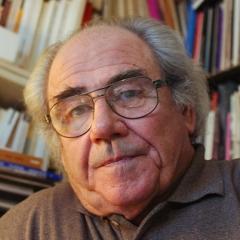
Jean Baudrillard
Jean Baudrillard was a French philosopher known for his critical studies on consumerism, media, and semiotics. His theories have had a profound impact on postmodernism and cultural studies. more
You May Also Like
“The child is torn apart when the parent part. - Nc Dash”
Source: Soul Works - The Minds Journal Collection
Source: American Girl: Memories That Made Me
Source: Letter to His Father
Source: Your Simple Path - Find Happiness in every step.
“I'd taken a pink eraser to my childhood and blurred the pain.”
Source: The Sentence
“Everything good is always somewhere else.”
Source: On Earth We're Briefly Gorgeous
Source: On Earth We're Briefly Gorgeous
Source: On Earth We're Briefly Gorgeous
Source: On Earth We're Briefly Gorgeous