Quotessence
Home / Quotes / Quote by Arthur Kornberg

Quote by Arthur Kornberg

Author

Arthur Kornberg
Arthur Kornberg

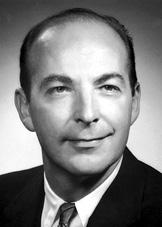
Arthur Kornberg was a renowned biochemist who won the 1959 Nobel Prize in Physiology or Medicine for his research on the mechanism of DNA synthesis. His work revealed the function of DNA polymerase, which had a profound impact on the fields of molecular biology and genetics. more

You May Also Like

“They sat on fold-up beach chairs and were talking about polio. The older ones, like his grandmother, had lived through the city's 1916 epidemic and were lamenting the fact that in the intervening years science had been unable to find a cure for the disease or come up with an idea of how to prevent it. Look at Weequahic, they said, as clean and sanitary as any section in the city, and it's the worst hit. There was talk, somebody said, of keeping the colored cleaning women from coming to the neighborhood for fear that they carried the polio germs up from the slums. Somebody else said that in his estimation the disease was spread by money, by paper money passing from hand to hand. The important thing, he said, was always to wash your hands after you handled paper money or coins. What about the mail, someone else said, you don't think it could be spread by the mail? What are you going to do, somebody retorted, suspend delivering the mail? The whole city would come to a halt.”

“Paige claimed my toothbrush!” I complained to no one in particular. “I forgot to pack my own,” Paige replied defensively, “not that I have one. I haven’t brushed my teeth in months, Tess, I ran away, remember? So I deserve it.” “You could use mine,” Jayden called, only half sarcastic. “What makes you think that has any potential to be a solution? And just because we’re dating now doesn’t mean there’s no such thing as germs!” I called back.”

“Beyond the cultural differences that must be bridged in any international effort, combined with factors of national politics, priorities, and values, we continue to grapple with the essential paradox of public health that began our discussion: when the system is working effectively, it is a silent venture and there are relatively few outbreaks of disease. These very successes lead most of us down a complacent path of false confidence, apathy, and assumptions that the endless dance is over. To complicate matters further, microbes themselves are hardly monolithic or permanently settled beings. For every attempt we make to destroy or weaken them, they respond with an equal and opposite force. The goal of both sides is to assume leadership of the evolutionary waltz ever in progress.”