Quotessence
Home / Quotes / Quote by Walter de La Mare

Quote by Walter de La Mare

“Pausing on the threshold, he looked in, conscious not so much of the few familiar sticks of furniture - the trucklebed, the worn strip of Brussels carpet, the chipped blue-banded ewer and basin, the framed illuminated texts on the walls - as of a perfect hive of abhorrent memories. That high cupboard in the corner, from which certain bodiless shapes had been wont to issue and stoop at him cowering out of his dreams; the crab-patterned paper that came alive as you stared; the window cold with menacing stars; the mouseholes, the rusty grate - trumpet of every wind that blows - these objects at once lustily shouted at him in their own original tongues. ("Out Of The Deep")”

Quote by Walter de La Mare

Work

Great Tales of Terror and the Supernatural

Browse quotes and source details for this work. more

Author
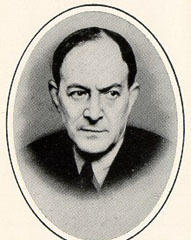
Walter de La Mare
Walter de La Mare

Walter de La Mare was a British poet celebrated for his works of fantasy and supernatural fiction. Born on April 25, 1873, he is renowned for his evocative poetry and his contributions to the genre of ghost stories. De La Mare's writing frequently delves into themes of the subconscious and the supernatural, solidifying his status as one of the most significant poets of the early 20th century. more

You May Also Like

“One day I'm a normal person with a normal life,” he said. “The next I'm standing on a street corner in Madrid with a secret phone and a hole in my arm and I'm bleeding all over, hoping I don't get arrested. It was completely crazy. But it seemed like the only way at the time.”

“This was it. This was what I had never felt before--an emotional connection to another human being. I'd tried kindness, I'd tried love, I'd tried friendship. I'd tried talking and sharing and watching, and nothing had ever worked until now. Until fear. I felt her fear in every inch of my body like an electric hum, and I was alive for the first time. I needed more right then or the craving would eat me alive.”

“The desire to make art begins early. Among the very young this is encouraged (or at least indulged as harmless) but the push toward a 'serious' education soon exacts a heavy toll on dreams and fantasies....Yet for some the desire persists, and sooner or later must be addressed. And with good reason: your desire to make art -- beautiful or meaningful or emotive art -- is integral to your sense of who you are. Life and Art, once entwined, can quickly become inseparable; at age ninety Frank Lloyd Wright was still designing, Imogen Cunningham still photographing, Stravinsky still composing, Picasso still painting. But if making art gives substance to your sense of self, the corresponding fear is that you're not up to the task -- that you can't do it, or can't do it well, or can't do it again; or that you're not a real artist, or not a good artist, or have no talent, or have nothing to say. The line between the artist and his/her work is a fine one at best, and for the artist it feels (quite naturally) like there is no such line. Making art can feel dangerous and revealing. Making art is dangerous and revealing. Making art precipitates self-doubt, stirring deep waters that lay between what you know you should be, and what you fear you might be. For many people, that alone is enough to prevent their ever getting started at all -- and for those who do, trouble isn't long in coming. Doubts, in fact, soon rise in swarms: "I am not an artist -- I am a phony. I have nothing worth saying. I'm not sure what I'm doing. Other people are better than I am. I'm only a [student/physicist/mother/whatever]. I've never had a real exhibit. No one understands my work. No one likes my work. I'm no good. Yet viewed objectively, these fears obviously have less to do with art than they do with the artist. And even less to do with the individual artworks. After all, in making art you bring your highest skills to bear upon the materials and ideas you most care about. Art is a high calling -- fears are coincidental. Coincidental, sneaky and disruptive, we might add, disguising themselves variously as laziness, resistance to deadlines, irritation with materials or surroundings, distraction over the achievements of others -- indeed anything that keeps you from giving your work your best shot. What separates artists from ex-artists is that those who challenge their fears, continue; those who don't, quit. Each step in the artmaking process puts that issue to the test.”