Quotessence
Home / Quotes / Quote by Thomas Bulfinch

Quote by Thomas Bulfinch

“Our book is not for the learned, nor for the theologian, nor for the philosopher, but for the reader of English literature, of either sex, who wishes to comprehend the allusions so frequently made by public speakers, lecturers, essayists, and poets, and those which occur in polite conversation. We trust our young readers will find it a source of entertainment; those more advanced, a useful companion in their reading; those who travel, and visit museums and galleries of art, an interpreter of paintings and sculptures; those who mingle in cultivated society, a key to allusions which are occasionally made; and last of all, those in advanced life, pleasure in retracing a path of literature which leads them back to the days of their childhood and revives at every step the associations of the morning of life.”

Quote by Thomas Bulfinch

Work

The Age of Fable Volume 1

Browse quotes and source details for this work. more

Author
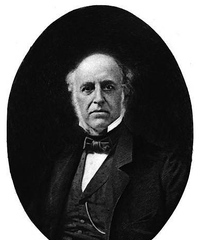
Thomas Bulfinch
Thomas Bulfinch

Thomas Bulfinch was an American writer born on July 15, 1796, and died on May 27, 1867. He is known for his research on mythology, legends, and literature, with his work 'Myths and Legends' still widely read today. more

You May Also Like

“We have to be prepared to allow a myth to change us forever. Together with the rituals that break down the barrier between the listener and the story, and which help him to make it his own, a mythical narrative is designed to push us beyond the safe certainties of the familiar world into the unknown. Reading a myth without the transforming ritual that goes with it is as incomplete an experience as simply reading the lyrics of an opera without the music. Unless it is encountered as part of a process of regeneration, of death and rebirth, mythology makes no sense.”

“I fear,' replied the mother of mankind. 'I fear now to beget the female race. If a father can endanger his own daughter, who shall keep them safe? Who shall heal them if everybody wounds them? ' He remained silent but she trembled. 'I fear now. I fear now to give them beauty for men might disrobe them. I fear now to give them wisdom for men might degrade them. I fear now to give them choices for men might disown them. I fear now to give them power for men might destroy them.' She moved away from him. 'I fear, Manu. I fear.”

“When Athens loses its hold on its empire, Hera still sees Athena: a grey-feathered owl tilting its head in the town square where men debate philosophy and rationality, striving for sense and understanding; or else a flash of silver in the eyes of someone stacking another roll of papyrus in the public library, the teacher calling his students to lessons, or the woman demonstrating how the loom works to her attentive daughter. At the lush, rolling vineyards, she sometimes thinks she spots the laughing eyes of Dionysus in a jovial winemaker selling his wares. In the forests, she's convinced she catches a flash of Artemis, running in pursuit of a stag, or else she recognises her determined jawline in a defiant girl. In smoky forges, where blacksmiths wipe the sweat from their brows, she feels the patience of Hephaestus; and she is certain that Ares still runs wild on the battlefields, filling every fighter's heart with his destructive rage. Hestia is there, of course, in every kindly friend, at every welcoming hearth. She wonders where they see her - in rebellious wives, she hopes, in the iron souls of powerful queens, in resilient girls who find the strength to keep going.”

“Heracles was the strongest man who ever lived. No human, and almost no immortal creature, ever subdued him physically. With uncomplaining patience he bore the trials and catastrophes that were heaped upon him in his turbulent lifetime. With his strength came, as we have seen, a clumsiness which, allied to his apocalyptic bursts of temper, could cause death or injury to anyone who got in the way. Where others were cunning and clever, he was direct and simple. Where they planned ahead he blundered in, swinging his club and roaring like a bull. Mostly these shortcomings were more endearing than alienating. He was not, as the duping Atlas and the manipulation of Hades showed, entirely without that quality of sense, gumption and practical imagination that the Greeks called 'nous'. He possessed saving graces that more than made up for his exasperating faults. His sympathy for others and willingness to help those in distress was bottomless, as were the sorrow and shame that overcame him when he made mistakes and people got hurt. He proved himself prepared to sacrifice his own happiness for years at a stretch in order to make amends for the (usually unintentional) harm he caused. His childishness, therefore, was offset by a childlike lack of guile or pretence as well as a quality that is often overlooked when we catalogue the virtues: fortitude -the capacity to endure without complaint. For all his life he was persecuted, plagued and tormented by a cruel, malicious and remorseless deity pursuing a vendetta which punished him for a crime for which he could be in no way held responsible- his birth. No labour was more Heraclean than the labour of being Heracles. In his uncomplaining life of pain and persistence, in his compassion and desire to do the right thing, he showed, as the American classicist and mythographer Edith Hamilton put it, 'greatness of soul'. Heracles may not have possessed the pert agility and charm of Perseus and Bellerophon, the intellect of Oedipus, the talent for leadership of Jason or the wit and imagination of Theseus, but he had a feeling heart that was stronger and warmer than any of theirs.”