Quotessence
Home / Quotes / Quote by Homer

Quote by Homer

Work

Homer's Odyssey

Homer's Odyssey is an ancient Greek epic poem that recounts the adventures of Odysseus, the king of Ithaca, as he attempts to return home after the Trojan War. The narrative explores themes of loyalty, courage, and the human condition, while highlighting Odysseus's cleverness and resilience in the face of numerous challenges. more
Author

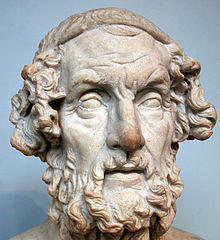
Homer
Homer

Homer, according to limited information, was an ancient Greek poet, credited with authorship of the epic poems 'The Iliad' and 'The Odyssey'. His biography is not well-documented, with the exact dates of his birth and death unknown. His works have had a profound impact on Western literature. more

You May Also Like

“Music anchors us to a time and place, rooted with feelings, and is invisible liquid nostalgia that flows through our ears directly into our hearts (where our memories are stored). What song was playing when you first thought about stealing a duck out of a park pond?”

“It is enough to be oneself, do what we can, like what we instinctively like, reach for what is within our grasp, and practice what is within our hearts. There are always many behind us and many before us. To look either way too much will only make us proud or hopeless. We are who we are. That is enough, and God asks nothing more.”

“Forgiveness is one of the most basic and vital qualities that make for a happy, healthy life and a progressive spiritual path. Genuine forgiveness is not a typical attitude of the heart. It requires too much honesty and too little ego for the average person. It is a deep and solitary process known to the individual and God. Its ramifications are highly beneficial and sometimes miraculous. To have an ongoing practice of forgiveness is to extend our health, beauty, and agelessness. It increases our ability to face life with freshness and energy. We grow in wisdom and glow with lightness throughout the years. The passing of time will have minimal effect on us as it is the accumulation of hurt, not the passing of years, which ages people most rapidly.”