“And therefore, as when there is a controversy in an account, the parties must by their own accord, set up for right Reason, the Reason of some Arbitrator, or Judge, to whose sentence, they will both stand, or their controversy must either come to blows, or be undecided, for want of a right Reason constituted by Nature; so is it also in all debates of what kind soever.”
Quote by Thomas Hobbes
Work
The Essential Leviathan: A Modernized Edition
This book includes a revised and updated version of Thomas Hobbes' classic text, 'Leviathan,' alongside other significant works by the philosopher. The modernized edition aims to make Hobbes' ideas more accessible to contemporary readers while preserving the original content and structure of the original treatise. more
Author
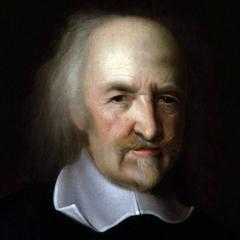
Thomas Hobbes
Thomas Hobbes, a British philosopher, politician, historian, economist, and writer, was born on April 5, 1588, in Wiltshire, and died on December 4, 1679, in Oxford, England. Hobbes is considered one of the most important philosophers of the 17th century, known for his profound analysis of the state, society, and human behavior. more
You May Also Like
Source: Of Liberty and Necessity; a treatise, wherein all controversy concerning predestination, election, free will, grace, merits, reprobation, etc. is fully decided and cleared. New edition
Source: The Ethics of Hobbes: As Contained in Selections from His Works
Source: Leviathan, Parts I and II - Revised Edition
Source: A Miscellany, Containing Several Tracts on Various Subjects
Source: Works: Account of His Life and Letters
Source: The Works of George Berkeley, D.D., Formerly Bishop of Cloyne: Philosophical works, 1732-33: Alciphron. The theory of vision
Source: Alciphron: Or, The Minute Philosopher. In Seven Dialogues Containing an Apology for the Christian Religion Against Those who are Called Free-thinkers
Source: Philosophical works
Source: A Treatise Concerning the Principles of Human Knowledge
Source: Principles of Human Knowledge: Human Understanding