Quotessence
Home / Quotes / Quote by George Berkeley

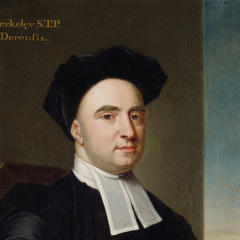
Quote by George Berkeley

“The love of truth, virtue, and the happiness of mankind are specious pretexts, but not the inward principles that set divines at work; else why should they affect to abuse human reason, to disparage natural religion, to traduce the philosophers as they universally do?”

Quote by George Berkeley

Work

Philosophical works

This comprehensive compilation delves into the depths of philosophical inquiry, presenting a wide array of perspectives on topics such as ethics, metaphysics, epistemology, and aesthetics. It includes seminal works from renowned philosophers across different historical periods, offering readers a rich tapestry of philosophical thought. more

Author

George Berkeley
George Berkeley

George Berkeley, born on March 12, 1685, and died on January 12, 1753, was a renowned philosopher of the 18th century. He is best known for his idealist philosophy, advocating the view that existence is dependent on perception. His major works include 'Principles of Human Knowledge' and 'A New Theory of Vision'. more

You May Also Like

“That the discovery of this great truth, which lies so near and obvious to the mind, should be attained to by the reason of so veryfew, is a sad instance of the stupidity and inattention of men, who, though they are surrounded with such clear manifestations of the Deity, are yet so little affected by them, that they seem as it were blinded with excess of light.”

“This perceiving, active being is what I call mind, spirit, soul, or myself. By which words I do not denote any one of my ideas, but a thing entirely distinct from them, wherein they exist, or, which is the same thing, whereby they are perceived; for the existence of an idea consists in being perceived.”

“That food nourishes, sleep refreshes, and fire warms us; that to sow in the seed-time is the way to reap in the harvest, and, in general, that to obtain such or such ends, such or such means are conducive, all this we know, not by discovering any necessary connexion between our ideas, but only by the observation of the settled laws of nature, without which we should be all in uncertainty and confusion, and a grown man no more know how to manage himself in the affairs of life than an infant just born.”

“The real essence, the internal qualities, and constitution of even the meanest object, is hid from our view; something there is inevery drop of water, every grain of sand, which it is beyond the power of human understanding to fathom or comprehend. But it is evidentthat we are influenced by false principles to that degree as to mistrust our senses, and think we know nothing of those things which we perfectly comprehend.”

“Nothing can be plainer, than that the motions, changes, decays, and dissolutions, which we hourly see befall natural bodies (and which is what we mean by the course of nature), cannot possibly affect an active, simple, uncompounded substance: such a being therefore is indissoluble by the force of nature, that is to say, the soul of man is naturally immortal.”

“Did men but consider that the sun, moon, and stars, and every other object of the senses, are only so many sensations in their minds, which have no other existence but barely being perceived, doubtless they would never fall down and worship their own ideas; but rather address their homage to that eternal invisible Mind which produces and sustains all things.”