“That food nourishes, sleep refreshes, and fire warms us; that to sow in the seed-time is the way to reap in the harvest, and, in general, that to obtain such or such ends, such or such means are conducive, all this we know, not by discovering any necessary connexion between our ideas, but only by the observation of the settled laws of nature, without which we should be all in uncertainty and confusion, and a grown man no more know how to manage himself in the affairs of life than an infant just born.”
Quote by George Berkeley
Work
Principles of Human Knowledge
This book delves into the fundamental questions of how humans acquire and process knowledge, examining the limits and possibilities of human understanding through philosophical inquiry. more
Author
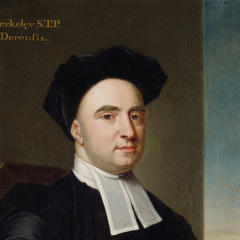
George Berkeley
George Berkeley, born on March 12, 1685, and died on January 12, 1753, was a renowned philosopher of the 18th century. He is best known for his idealist philosophy, advocating the view that existence is dependent on perception. His major works include 'Principles of Human Knowledge' and 'A New Theory of Vision'. more
You May Also Like
Source: A Treatise Concerning the Principles of Human Knowledge
Source: The applied philosophical works
Source: The works of George Berkeley
“I might as well doubt of my own being, as of the being of those things I actually see and feel.”
Source: Berkeley: Philosophical Writings
Source: Works, Including His Letters to Thomas Prior, Dean Gervais, Mr. Pope, &c. to which is Prefixed an Account of His Life
Source: Principles of Human Knowledge: Human Understanding
Source: Three Dialogues Between Hylas and Philonous
Source: Works: Account of His Life and Letters
“[Christianity] neither enjoins the nastiness of the Cynic, nor the insensibility of the Stoic.”
Source: Alciphron: or, The minute philosopher. 1732. Siris. 1744