Quotessence
Home / Quotes / Quote by Claude Bernard

Quote by Claude Bernard

Author

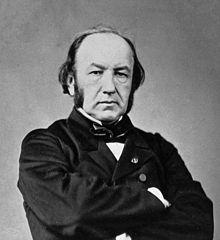
Claude Bernard
Claude Bernard

Claude Bernard was a French physiologist born on July 12, 1813, and died on February 10, 1878. He made significant contributions to the field of physiology, particularly in the study of the digestive system and the nervous system. more

You May Also Like

“I was working with these very long-chain ... extended-chain polymers, where you had a lot of benzene rings in them. ... Transforming a polymer solution from a liquid to a fiber requires a process called spinning. ... We spun it and it spun beautifully. It [Kevlar] was very strong and very stiff-unlike anything we had made before. I knew that I had made a discovery. I didn't shout "Eureka!" but I was very excited, as was the whole laboratory excited, and management was excited, because we were looking for something new. Something different. And this was it.”

“Men who have excessive faith in their theories or ideas are not only ill prepared for making discoveries; they also make very poor observations. Of necessity, they observe with a preconceived idea, and when they devise an experiment, they can see, in its results,only a confirmation of their theory. In this way they distort observation and often neglect very important facts because they do not further their aim.”

“The sequence of theorist, experimenter, and discovery has occasionally been compared to the sequence of farmer, pig, truffle. The farmer leads the pig to an area where there might be truffles. The pig searches diligently for the truffles. Finally, he locates one, and just as he is about to devour it, the farmer snatches it away.”

“There is a great deal of emotional satisfaction in the elegant demonstration, in the elegant ordering of facts into theories, and in the still more satisfactory, still more emotionally exciting discovery that the theory is not quite right and has to be worked over again, very much as any other work of art-a painting, a sculpture has to be worked over in the interests of aesthetic perfection. So there is no scientist who is not to some extent worthy of being described as artist or poet.”