“Rivers are the primal highways of life. From the crack of time, they had borne men's dreams, and in their lovely rush to elsewhere, fed our wanderlust, mimicked our arteries, and charmed our imaginations in a way the static pond or vast and savage ocean never could.”
Quote by Tom Robbins
Work
Fierce Invalids Home From Hot Climates
The title presents a striking combination of contrasting concepts. The word fierce indicates sharpness of will or intensity of spirit, while invalids suggests persons affected by illness or physical weakness. The phrase home from hot climates implies a journey undertaken to warmer territories and subsequent return, potentially alluding to historical practices of seeking healing in tropical environments. The title's poetic construction suggests metaphorical rather than literal meaning, with the juxtaposition of fierce determination against physical frailty creating a memorable and symbolic phrasing. The language hints at questions of health, place, and identity without specifying particular characters, settings, or narrative events. more
Author
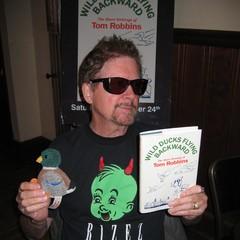
Tom Robbins
Tom Robbins (born July 22, 1936) is an acclaimed American novelist known for his whimsical, philosophical, and often surreal storytelling. His works blend pop culture, Eastern spirituality, and countercultural themes, with notable titles including 'Another Roadside Attraction' and 'Even Cowgirls Get the Blues'. Born in North Carolina, Robbins worked as a journalist and art critic before turning to fiction. His novels are celebrated for their linguistic playfulness, eccentric characters, and profound meditations on love, freedom, and the human condition. Though not a recipient of major literary prizes, he has cultivated a devoted global readership and influenced generations of writers. He remains a distinctive voice in contemporary American literature. more
You May Also Like
Source: Prince Otto
Source: ANNA KARENINA
“In our attempt to make conservation easy, we have made it trivial.”
Source: A Sand County Almanac, and Sketches Here and There
Source: Aldo Leopold: A Sand County Almanac & Other Writings on Conservation and Ecology: (Library of America #238)
Source: Nice Guys Finish Last
Source: Aldo Leopold: A Sand County Almanac & Other Writings on Conservation and Ecology: (Library of America #238)
Source: Arctic Dreams