“All at once the anger ran out of John Harkless; he was a hard man for anger to tarry with. And in place of it a strong sense of home-coming began to take possession of him. He was going home. “Back to Plattville, where I belong,” he had said; and he said it again without bitterness, for it was the truth. “Every man cometh to his own place in the end.” Yes, as one leaves a gay acquaintance of the playhouse lobby for some hard-handed, tried old friend, so he would wave the outer world God-speed and come back to the old ways of Carlow. What though the years were dusty, he had his friends and his memories and his old black brier pipe. He had a girl’s picture that he should carry in his heart till his last day; and if his life was sadder, it was infinitely richer for it. His winter fireside should be not so lonely for her sake; and losing her, he lost not everything, for he had the rare blessing of having known her. And what man could wish to be healed of such a hurt? Far better to have had it than to trot a smug pace unscathed. He had been a dullard; he had lain prostrate in the wretchedness of his loss. “A girl you could put in your hat — and there you have a strong man prone.” He had been a sluggard, weary of himself, unfit to fight, a failure in life and a failure in love. That was ended; he was tired of failing, and it was time to succeed for a while. To accept the worst that Fate can deal, and to wring courage from it instead of despair, that is success; and it was the success that he would have. He would take Fate by the neck. But had it done him unkindness? He looked out over the beautiful, “monotonous” landscape, and he answered heartily, “No!” There was ignorance in man, but no unkindness; were man utterly wise he were utterly kind.”
Quote by Booth Tarkington
Work
The Gentleman from Indiana
Browse quotes and source details for this work. more
Author
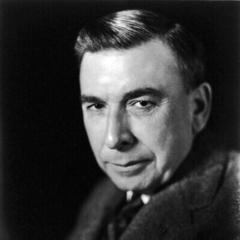
Booth Tarkington
Booth Tarkington was an American novelist known for his works that often depicted the lives of the upper class in the early 20th century. His writing style was characterized by wit and social commentary, and he won the Pulitzer Prize for Fiction twice. more
You May Also Like
“What is to be will be, and what isn't to be happens sometimes.”
Source: Anne of the Island
“No matter how many times I got separated from him, I would always find him again.”
Source: Fated to Meet You
Source: Edda: Skaldskaparmal (Set of 2 Copies)
Source: A Gentleman in Moscow
Source: The Apocalypse of Elena Mendoza
Source: The Dragon's Perfect Omega
“I'm still waiting to bump into someone or just look at him and realize he's the one.”
Source: Fated to Meet You