Quotessence
Home / Quotes / Quote by Konstantin Tsiolkovsky

Quote by Konstantin Tsiolkovsky

Author
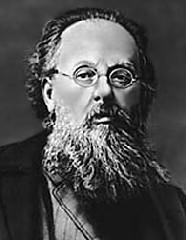
Konstantin Tsiolkovsky

Konstantin Tsiolkovsky, born on September 17, 1857, and died on September 19, 1935, was a renowned Russian scientist, mathematician, engineer, and inventor. Known as the 'Father of Space Travel,' he made significant contributions to the fields of rocket science and space exploration. Tsiolkovsky's theories on rocket propulsion and space travel laid the groundwork for the development of modern space technology. more

You May Also Like

“The universe will finally become a ball of radiation, becoming more and more rarified and passing into longer and longer wave-lengths. The longest waves of radiation are Hertzian waves of the kind used in broadcasting. About every 1500 million years this ball of radio waves will double in diameter; and it will go on expanding in geometrical progression for ever. Perhaps then I may describe the end of the physical world as-one stupendous broadcast.”

“The choice, as Wells once said, is the Universe-or nothing. . . . The challenge of the great spaces between the worlds is a stupendous one; but if we fail to meet it, the story of our race will be drawing to its close. Humanity will have turned its back upon the still untrodden heights and will be descending again the long slope that stretches, across a thousand million years of time, down to the shores of the primeval sea.”

“Development of the space station is as inevitable as the rising of the sun; man has already poked his nose into space and he is not likely to pull it back . . . . There can be no thought of finishing, for aiming at the stars-both literally and figuratively-is the work of generations, and no matter how much progress one makes, there is always the thrill of just beginning.”

“The first men who set out for Mars had better make sure they leave everything at home in apple-pie order. They won't get back to earth for more than two and a half years. The difficulties of a trip to mars are formidable. . . . What curious information will these first explorers carry back from Mars? Nobody knows-and its extremely doubtful that anyone now living will ever know. All that can be said with certainty today is this: the trip will be made, and will be made . . . someday.”