Quotessence
Home / Quotes / Quote by Alan Watts

Quote by Alan Watts

“If we want justice for minorities and cooled wars with our natural enemies, whether human or non-human, we must first come to terms with the minority and the enemy in ourselves and in our own hearts, for the rascal is there as much as anywhere in the "external" world - -especially when you realize that the world outside your skin is as much yourself as the world inside.”

Quote by Alan Watts

Author
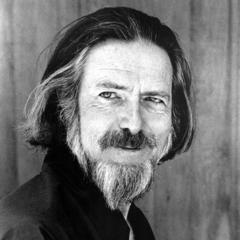
Alan Watts
Alan Watts

Alan Watts was a British philosopher, writer, and speaker known for his exploration of the relationship between Eastern and Western thought, particularly focusing on Zen Buddhism and its influence on Western culture. His work has influenced many in the areas of spirituality, psychology, and the philosophy of science. more

You May Also Like

“The point, which can hardly be repeated too often, is that differentiation is not separation. The head and the feet are different, but not separate, and though man is not connected to the universe by exactly the same physical relation as branch to tree or feet to head, he is nonetheless connected - and by physical relations of fascinating complexity.”

“I've been told that certain species of fish will grow according to the size of their environment. Put them in a tiny aquarium, and they remain small even at adulthood. Release them into a huge natural body of water, and they grow into their intended size. People are similar. If they live in a harsh and limiting environment, they stay small. But put them someplace that encourages growth, and they will expand to reach their potential.”

“Think back to the most important experiences of your life, the highest highs, the greatest victories, the most daunting obstacles overcome. How many happened to you alone? I bet there are very few. When you understand that being connected to others is one of life's greatest joys, you realize that life's best comes when you initiate and invest in solid relationships.”

“We don't seek the painful experiences that hew our identities, but we seek our identities in the wake of painful experiences. We cannot bear a pointless torment, but we can endure great pain if we believe that it's purposeful. Ease makes less of an impression on us than struggle. We could have been ourselves without our delights, but not without the misfortunes that drive our search for meaning. 'Therefore, I take pleasure in infirmities,' St. Paul wrote in Second Corinthians, 'for when I am weak, then I am strong.'”