Quotessence
Home / Quotes / Quote by Gaston Bachelard

Quote by Gaston Bachelard

“How is it possible not to feel that there is communication between our solitude as a dreamer and the solitudes of childhood? And it is no accident that, in a tranquil reverie, we often follow the slope which returns us to our childhood solitudes.”

Quote by Gaston Bachelard

Author
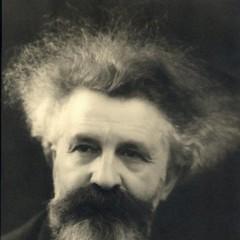
Gaston Bachelard
Gaston Bachelard

French philosopher known for his work in epistemology, poetics, and the philosophy of science. His writings have had a profound impact on 20th-century philosophy, particularly in understanding human cognition and the scientific method. more

You May Also Like

“Here we are at the very core of the thesis we wish to defend in the present essay: reverie is under the sign of the anima. When the reverie is truly profound, the being who comes to dream within us is our anima. For a philosopher who takes his inspiration from phenomenology, a reverie on reverie is very exactly a phenomenology of the anima, and it is by coordinating reveries on reverie that he hopes to constitute a "Poetics of reverie". In other words, the poetics of reverie is a poetics of the anima.”

“In order to dream so far, is it enough to read? Isn't it necessary to write? Write as in our schoolboy past, in those days when, as Bonnoure says, the letters wrote themselves one by one, either in their gibbosity or else in their pretentious elegance? In those days, spelling was a drama, our drama of culture at work in the interior of a word.”

“It is quite evident that a barrier must be cleared in order to escape the psychologists and enter into a realm which is not "auto-observant", where we ourselves no longer divide ourselves into observer and observed. Then the dreamer is completely dissolved in his reverie. His reverie is his silent life. It is that silent peace which the poet wants to convey to us.”

“If there is any realm where distinction is especially difficult, it is the realm of childhood memories, the realm of beloved images harbored in memory since childhood. These memories which live by the image and in virtue of the image become, at certain times of our lives and particularly during the quiet age, the origin and matter of a complex reverie: the memory dreams, and reverie remembers.”

“Very often, I confess, the teller of dreams bores me. His dream could perhaps interest me if it were frankly worked on. But to hear a glorious tale of his insanity! I have not yet clarified, psychoanalytically, this boredom during the recital of other people's dreams. Perhaps I have retained the stiffness of a rationalist. I do not follow the tale of justified incoherence docilely. I always suspect that part of the stupidities being recounted are invented.”