Quotessence
Home / Quotes / Quote by Patrick Rothfuss

Quote by Patrick Rothfuss

“It's my belief that you should never show your work to anyone in the publishing world until it shines like a diamond. Rough drafts don't shine, as a rule. Mine certainly didn't. That's why I was rejected for years and years.”

Quote by Patrick Rothfuss

Author
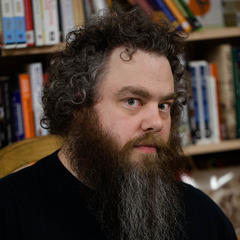
Patrick Rothfuss
Patrick Rothfuss

Patrick Rothfuss, born on June 6, 1973, is a renowned American writer known for his works in the fantasy genre. His most famous series is 'The Name of the Wind,' which has gained widespread acclaim for its unique narrative style and profound philosophical insights. more

You May Also Like

“You can teach almost anyone determined to learn them the basics required to write sentences and paragraphs that say what you want them to say clearly and concisely. It's far more difficult to get people to think like a writer, to give up conventional habits of mind and emotion. You must be able to step inside your character's skin, and at the same time to remain outside the dicey circumstances you have maneuvered her into.”

“Regard yourself as a small corporation of one. Take yourself off on team-building exercises (long walks). Hold a Christmas party every year at which you stand in the corner of your writing room, shouting very loudly to yourself while drinking a bottle of white wine. Then masturbate under the desk. The following day you will feel a deep and cohering sense of embarrassment.”

“People like ourselves may see nothing wondrous in writing, but our anthropologists know how strange and magical it appears to a purely oral people - a conversation with no one and yet with everyone. What could be stranger than the silence one encounters when addressing a question to a text? What could be more metaphysically puzzling than addressing an unseen audience, as every writer of books must do? And correcting oneself because one knows that an unknown reader will disapprove or misunderstand?”

“Several factors besides skill are more significant in professional writers than in most amateurs. One is love of the surface level of language: the sound of it; the taste of it on the tongue; what it can be made to do in virtuosic passages that exist only for their own sake, like cadenzas in baroque concerti. Writers in love with their tools are not unlike surgeons obsessed with their scalpels, or Arctic sled racers who sleep among their dogs even when they don't have to.”

“...But I don't think I'm the only person who is tired of books and movies full of paper-doll characters you don't care about, who have no self-respect and no respect for anybody or any institution....And I don't want to sound preachy or Victorian, but I'm tired of amorality in fiction and in real life. Immorality is a fascinating human dilemma that creates suspense for the readers and tension for the characters, but where is the tension in an amoral situation? When people have no personal code, nothing is threatening and nothing is meaningful.”

“Writing can be a pretty desperate endeavor, because it is about some of our deepest needs: our need to be visible, to be heard, our need to make sense of our lives, to wake up and grow and belong. It is no wonder if we sometimes tend to take ourselves perhaps a bit too seriously.”