Quotessence
Home / Quotes / Quote by Darold Treffert

Quote by Darold Treffert

“Sometimes along the way, when people are actively working, they will start to do a search for their roots and maybe get really interested in ancestry and become very good at what was just a hobby. But I think that we shouldn't wait quite that long to develop and look for those parallel interests of ours and not sometimes see them as frivolous and take them a little more seriously, and spend some time and energy and maybe even capital in pursuing them.”

Quote by Darold Treffert

Author
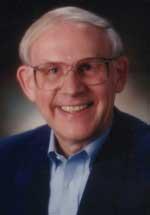
Darold Treffert
Darold Treffert

Darold Treffert is a renowned psychiatrist, born in 1932. He has extensive research in the field of psychiatry, particularly in child psychiatry and the psychology of genius. Dr. Treffert is known for his in-depth studies on autism, Asperger's syndrome, and other related mental health issues. more

You May Also Like

“What happens is most of us are so busy in our lives with our families and our vocation which we should be, but we tend not to look at what I call these parallel interests, and they develop along the way. And sometimes one can say, well, you know, why should I grow my own garden and spend all that time when I can buy carrots cheaper at the supermarket and just put aside that kind of an interest.”

“When I met my first savant in 1962, I was impressed by the abilities in these youngsters who had severe disabilities. They appeared to me to be islands of genius in the sea of disability. So I've maintained that word picture since that time, of these islands of genius that are so striking and so jarring when you see them, especially in people who have severe disability.”

“A savant, by definition, is somebody who has a disability and, along with that disability, has some remarkable ability. Prodigies and geniuses have the remarkable abilities that the savant shows, but they do not have a disability. So, by definition, a savant includes someone with a disability, and a prodigy or genius are people who have these remarkable skills but they do not have a disability.”

“We can't use the word normal anymore because it's sort of come to be politically incorrect, because normal implies a classification, and categorizations, and exclusions, and so forth. So neurotypical is the word that we now have to use for what I call normal behavior. Neurotypical behaviors are those kinds of behaviors within the range of usual human conduct that do not rise to the level of a disorder.”

“We have to be careful that we don't keep multiplying disorders and diluting them. I think there is a difference. People talk about Asperger's as high-functioning autism, which I think it is. But it does have some of its own characteristics, like the preservation of language, particularly, which may be right brain dysfunction instead of left brain dysfunction, and we lose something in that, as things lose their specificity, and we keep diluting things. I'm not sure that's helpful.”