Quotessence
Home / Quotes / Quote by Cormac McCarthy

Quote by Cormac McCarthy

“But who will find him if he's lost? Who will find the little boy? Goodness will find the little boy. It always has. It will again.”

Quote by Cormac McCarthy

Work

The Road

Cormac McCarthy's 'The Road' is a profound and moving narrative that explores themes of survival, love, and hope in a world decimated by an unspecified disaster. The story follows a father and his young son as they journey through a desolate landscape, seeking safety and warmth amidst the remnants of a civilization. The narrative is spare and poetic, offering a poignant look at the resilience of the human spirit in the face of unimaginable adversity. more
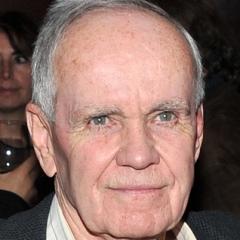
Author

Cormac McCarthy
Cormac McCarthy

American novelist known for his profound literary style and rich imagination. His notable works include 'The Border Trilogy' and 'No Country for Old Men'. more

You May Also Like

“This rabbi," said Merlyn, "went on a journey with the prophet They walked all day, and at nightfall they came to the sumble cotage of a poor man, whose only treasure was a cow. The poor man ran out of his cottage, and his wife ran too, to welcome the strangers for the night and to offer them all the simple hospitality which they were able to give in straitened circumstances. Elijah and the Rabbi were entertained with plenty of the cow's milk, sustained by home-made bread and butter, and they were put to sleep in the best bed while their kindly hosts lay down before the kitchen fire. But in the morning the poor man's cow was dead." "Go on." "They walked all the next day, and came that evening to the house of a very wealthy merchant, whose hospitality they craved. The merchant was cold and proud and rich, and all that he would do for the prophet and his companion was to lodge them in a cowshed and feed them on bread and water. In the morning, however, Elijah thanked him very much for what he had done, and sent for a mason to repair one of his walls, which happened to be falling down, as a return for his kindness. "The Rabbi Jachanan, unable to keep silence any longer, begged the holy man to explain the meaning of his dealings with human beings. "In regard to the poor man who received us so hospitably,' replied the prophet, 'it was decreed that his wife was to die that night, but in reward for his goodness God took the cow instead of the wife. I repaired the wall of the rich miser because a chest of gold was concealed near the place, and if the miser had repaired the wall himself he would have discovered the treasure. Say not therefore to the Lord: What doest thou? But say in thy heart: Must not the Lord of all the earth do right?'" "It is a nice sort of story," said the Wart, because it seemed to be over.”

“Father said he wasn’t worried. He said Americans are like this, brittle with privilege. Sometimes anger robs them of their senses and they make bad decisions, but in a way this was really just another testament to American greatness—how adept the United States was at surviving its endless self-inflicted wounds. We live in a good country, he said, and it will be good again.”

“अंतिम प्रस्थान खुद की चिता को अब स्वयं आग करते हैं, चलो इस अंतहीन पीड़ा का अब बहिष्कार करते हैं। मीरा के उस प्रेम का अब राग करते हैं, वैराग्य की राह का अब बस जाप करते हैं। चलो इस बार भी हम सबको माफ़ करते हैं, विरह के आलाप से खुद को ही साफ़ करते हैं। चलो अब प्रेम का ही प्रकाश करते हैं, प्रेम त्याग कर अब खुद का ही त्याग करते हैं। अपनी अंतहीन पीड़ा का संहार करते हैं, बैसाखी से अब सागर पार करते हैं। चिता की अग्नि से अब आखिरी श्रृंगार करते हैं, चलो हम भी अब खुद को माफ़ करते हैं।”

“Freud taught that for any human being kindness or cruelty, having a sense of justice or lacking it, depend on the accidents of childhood. We all know this to be true, but it goes against much of what we say we believe. We cannot give up the pretence that being good is something anyone can achieve. If we did, we would have to admit that, like beauty and intelligence, goodness is a gift of fortune. We would have to accept that, in the parts of our lives where we are most attached to it, free­dom of the will is an illusion. We would have to own up to what we all deny—that being good is good luck. By making us face this awkward truth, Freud wounded the concept of 'morality' more deeply than did Nietzsche.”