Quotessence
Home / Quotes / Quote by Frank Lloyd Wright

Quote by Frank Lloyd Wright

“We've been fighting from the beginning for organic architecture. That is, architecture where the whole is to the part as the part is to the whole, and where the nature of materials, the nature of the purpose, the nature of the entire performance becomes a necessity-architecture of democracy.”

Quote by Frank Lloyd Wright

Author
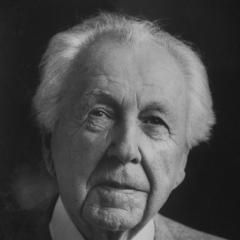
Frank Lloyd Wright
Frank Lloyd Wright

Frank Lloyd Wright, born on June 8, 1867, and died on April 9, 1959, was a renowned American architect, often hailed as the father of modern architecture. Known for his unique architectural style and design philosophy, Wright emphasized the harmony between nature and architecture, which had a profound impact on the architectural world. more

You May Also Like

“Whether moral and social phenomena are really exceptions to the general certainty and uniformity of the course of nature; and how far the methods, by which so many of the laws of the physical world have been numbered among truths irrevocably acquired and universally assented to, can be made instrumental to the gradual formation of a similar body of received doctrine in moral and political science.”

“While Newton seemed to draw off the veil from some of the mysteries of nature, he showed at the same time the imperfections of the mechanical philosophy; and thereby restored her ultimate secrets to that obscurity, in which they ever did and ever will remain.”

“While the nature of Texas fever is by no means made clear as yet, we are able to affirm that ticks can produce it. Whether the disease can be transmitted by any other agency must be decided by future investigations. Meanwhile the evidence accumulated thus far seems to favor very strongly the dictum: No ticks, no Texas fever.”

“You must not talk about 'ain't and can't' when you speak of this great wonderful world round you, of which the wisest man knows only the very smallest corner, and is, as the great Sir Isaac Newton said, only a child picking up pebbles on the shore of a boundless ocean.”

“Most poor people are not on welfare. . . I know they work. I'm a witness. They catch the early bus. They work every day. They raise other people's children. They work every day. They clean the streets. They work every day. They drive vans with cabs. They work every day. They change beds you slept in these hotels last night and can't get a union contract. They work every day . . .”