Quotessence
Home / Quotes / Quote by Ursula K. Le Guin

Quote by Ursula K. Le Guin

“All of us have to learn how to invent our lives, make them up, imagine them. We need to be taught these skills; we need guides to show is how. Without them, our lives get made up for us by other people. Human beings have always joined in groups to imagine how best to live and help one another carry out the plan. The essential function of human community is to arrive at some agreement on what we need, what life ought to be, what we want our children to learn, and then to collaborate in learning and teaching so that we and they can go on the way we think is the right way. Small communities with strong traditions are often clear about the way they want to go, and good at teaching it. But tradition may crystallize imagination to the point of fossilizing it as dogma and forbidding new ideas. Larger communities, such as cities, open up room for people to imagine alternatives, learn from people of different traditions, and invent their own ways to live. As alternatives proliferate, however, those who take the responsibility of teaching find little social and moral consensus on way they should be teaching -- what we need, what life ought to be. In our time of huge populations exposed continuously to reproduced voices, images, and words used for commercial and political profit, there are too many people who want to and can invent us, own us, shape and control us through seductive and powerful media. It's a lot to ask of a child to find a way through all that alone. Nobody can do anything very much, really, alone. What a child needs, what we all need, is to find some other people who have imagined life along lines that make sense to us and allow some freedom, and listen to them. Not hear passively, but listen.”

Quote by Ursula K. Le Guin

Work

Words Are My Matter: Writings About Life and Books, 2000-2016

Browse quotes and source details for this work. more

Author
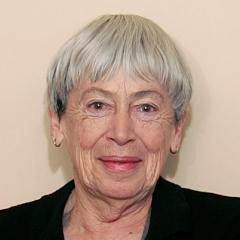
Ursula K. Le Guin
Ursula K. Le Guin

Ursula K. Le Guin, born on October 21, 1929, is an esteemed American author of science fiction and fantasy. Known for her profound philosophical insights, rich imagination, and unique narrative style, Le Guin's works have won numerous literary awards and have had a significant impact on science fiction and fantasy literature. Her most famous works include the 'Earthsea' series and 'The Left Hand of Darkness', which have won her awards such as the Nebula and Hugo Awards, and she has also received the National Book Award for lifetime achievement for her contributions to literature. more

You May Also Like

“If you want to know what makes you happy, imagine your very last day on this earth. Think about who you would wish to spend it with, where you might be and what you might be doing. For me, I would wish to spend it with the ones I love, somewhere not far from Nature, by the ocean, or maybe in a vibrant city, in a street with sights and sounds of people. Perhaps there's a vista of a fountain or a river... and watching the world go by, I'd be writing, completing the last chapter to a final book ...”

“All of us have to learn how to invent our lives, make them up, imagine them. We need to be taught these skills; we need guides to show us how. Without them, our lives get made up for us by other people. Human beings have always joined in groups to imagine how best to live and help one another carry out the plan. The essential function of human community is to arrive at some agreement on what we need, what life ought to be, what we want our children to learn, and then to collaborate in learning and teaching so that we and they can go on the way we think is the right way. Small communities with strong traditions are often clear about the way they want to go, and good at teaching it. But tradition may crystallize imagination to the point of fossilizing it as dogma and forbidding new ideas. Larger communities, such as cities, open up room for people to imagine alternatives, learn from people of different traditions, and invent their own ways to live. As alternatives proliferate, however, those who take the responsibility of teaching find little social and moral consensus on what they should be teaching -- what we need, what life ought to be. In our time of huge populations exposed continuously to reproduced voices, images, and words used for commercial and political profit, there are too many people who want to and can invent us, own us, shape and control us through seductive and powerful media. It's a lot to ask of a child to find a way through all that alone. Nobody can do anything very much, really, alone. What a child needs, what we all need, is to find some other people who have imagined life along lines that make sense to us and allow some freedom, and listen to them. Not hear passively, but listen.”

“A dream is our imagination waiting for us to be brave enough to pick up a pencil, zealous enough to sketch out a blueprint, determined enough to gather the tools, committed enough to lean into the task, and audacious enough to make imagination the reality that it was always meant to be. For in time, a dream left to be nothing but a dream will eventually leave our souls believing that dreams aren’t worth imagining. And I can only imagine a handful of things as devastating as that.”