Quotessence
Home / Quotes / Quote by John Milton

Quote by John Milton

“Shall that be shut to man, which to the beast Is open? or will God incense his ire For such a petty trespass? and not praise Rather your dauntless virtue, whom the pain Of death denounced, whatever thing death be, Deterred not from achieving what might lead To happier life, knowledge of good and evil; Of good, how just? of evil, if what is evil Be real, why not known, since easier shunned? God therefore cannot hurt ye, and be just; Not just, not God: not feared then, nor obeyed: Your fear itself of death removes the fear. Why then was this forbid? Why, but to awe; Why, but to keep ye low and ignorant, His worshippers? He knows that in the day Ye eat thereof, your eyes, that seem so clear, Yet are but dim, shall perfectly be then Opened and cleared, and ye shall be as gods, Knowing both good and evil, as they know.”

Quote by John Milton

Work

Paradise lost

Written by John Milton, Paradise Lost is a profound narrative that delves into the origins of evil and the struggle between good and evil. The poem narrates the story of the fall of Adam and Eve, their expulsion from Eden, and the subsequent war in heaven. It is renowned for its complex characters, rich symbolism, and profound theological and philosophical themes. more

Author
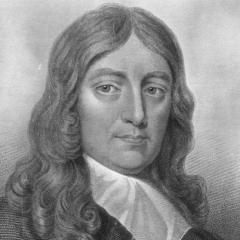
John Milton
John Milton

John Milton, born on December 9, 1608, in London, and died on November 8, 1674, was a renowned English poet and scholar. He is best known for his epic poem 'Paradise Lost,' which has had a profound impact on world literature. more

You May Also Like

“To the person who believes this- as the western world did up until a few centuries ago- this physical, sensible world is good because it proceeds from a divine source. The artist usually knows this by instinct; his senses, which are used to penetrating the concrete, tell him so. When Conrad said that his aim as an artist was to render the highest possible justice to the visible universe, he was speaking with the novelist's surest instinct. The artist penetrates the concrete world in order to find at its depths the image of its source, the image of ultimate reality. This in no way hinders his perception of evil but rather sharpens it, for only when the natural world is seen as good does evil become intelligible as a destructive force and a necessary result of our freedom.”

“The thing that's hard about it—the thing that makes it so hard when the person you love has been taken from you, not by something evil you could have seen coming but by random, pure chance—is that you find yourself suddenly living through a history other than the one you expected to live, through no fault of your own. I feel . . . it's hard to describe, but I feel weirdly outside of time. Ever since the accident I've had these moments when I felt like a visiting guest in this world, not a permanent resident. Like sometimes I look in a mirror and I feel like I can almost see through the version of me on the other side of the glass. And sometimes I feel like I can see the history I used to be in more clearly than the history I'm in now—the real history is one where Philip and Sean and I are all together, being a family and doing whatever family things people do, and this one's like . . . like a fake version of events that I've been yanked into, where everything's gone wrong.”

“Yet, my grandfather was not a monster. He was simply a man of ordinary moral courage whose capacity for great evil was revealed to his and my everlasting shame. Labeling someone a monster implies that he is from another world, one which has nothing to do with us. It cuts off the bonds of affection and fear, assures us of our own superiority, but there's nothing learned, nothing gained. It's simple, but it's cowardly. I know now that only by empathizing with a man like my grandfather can we understand the depth of the suffering he caused. There are no monsters. The monster is us.”

“We priests are sneered at and always shall be—the accusation is such an easy one—as deeply envious, hypocritical haters of virility. Yet whosoever has experienced sin must know that lust, with its parasitic growth, is for ever threatening to stifle virility as well as intelligence. Impotent to create, it can only contaminate in the germ the frail promise of humanity; it is probably at the very source, the primal cause of all human blemishes; and when amid the windings of this huge jungle whose paths are unknown, we encounter Lust, just as she is, as she emerged forth from the hands of the Master of Prodigies, the cry from our hearts is not only terror but imprecation: 'You, you alone have set death loose upon the world!”