Quotessence
Home / Quotes / Quote by Agatha Christie

Quote by Agatha Christie

“People who do not feel amiable are putting great pressure on themselves to be amiable! There is at Christmas a great deal of hypocrisy, honourable hypocrisy, hypocrisy undertaken pour le bon motif, c'est entendu, but nevertheless hypocrisy!”

Quote by Agatha Christie

Work

Hercule Poirot's Christmas

In this novel, the renowned detective Hercule Poirot is called upon to solve a perplexing murder that occurs amidst the festive spirit of Christmas. The story delves into the complexities of human nature and the intricacies of a well-crafted mystery, showcasing Poirot's unparalleled deductive skills. more

Author
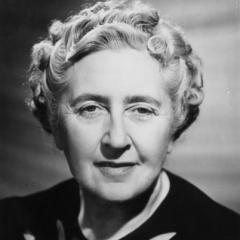
Agatha Christie
Agatha Christie

Agatha Christie, a renowned British detective novel writer, is known as the Queen of Detective Fiction. She was born on September 15, 1890, and passed away on January 12, 1976. Christie's works are characterized by intricate plots, unique reasoning, and vivid characters, and have had a profound impact on detective fiction worldwide. more

You May Also Like

“Gradually his wagers got bigger, as he needed to gamble more money to have the same thrill that he had once gotten from just $5. And because he was betting digitally, the “money never felt real.” Scholars have documented that casino chips help dissociate gamblers from the size of their bets, encouraging them to act more liberally than they ever would with cash. Smartphones take this dissociation to a whole new level.”

“His partner knew he liked sports but had no idea the extent of his gambling. They would have explosive fights sometimes, which multiple family members said was very unlike him. His gambling set him constantly on edge, exacerbating the tensions in their relationship. Andrew was, by his own admission, living two lives, and he could not prevent one life from affecting the other.”

“When someone engages in a pleasurable activity like gambling, their brain releases dopamine, a neurotransmitter that processes rewards. Dopamine is what makes these activities feel pleasurable. Psychiatrist Anna Lembke explains that pleasure and pain act on an equilibrium, encouraging limits on the activity in question, no matter how enjoyable. Over time, repeated exposure to pleasure means the brain requires more of that activity—gambling with more money, for example—to receive the same amount of dopamine. Once someone has built up a tolerance, they are susceptible to addiction and, with their equilibrium imbalanced in favor of pain, they will need ever-increasing amounts to experience even a modicum of pleasure—or simply a break from pain.”

“Gambling addiction is not an addiction to winning money. Problem gamblers’ brains do not release any more dopamine when they win a bet than non-problem gamblers’ brains. The largest difference—when problem gamblers release markedly more dopamine than non-problem gamblers—comes at moments of high uncertainty. These instances provide the rush and the fleeting pleasure/pain equilibrium to which problem gamblers are addicted.”

“He was addicted to the dopamine high that came with the feeling of a bet hanging on the outcome of a game, having a stake in something he could not control. “Since I started gambling, I could turn every day—no matter how much work/school/ stress I had into the most exciting day of the year,” he later wrote in his journal. He would bet in the shower. He would bet while driving. Betting became his reason to wake up in the morning. He would place a wager before he fell asleep and wake up eagerly to check the result. Regardless of the outcome, he would place another bet, his action the only thing that could motivate him to get out of bed and start the day.”

“Winning money felt different, providing a hit of dopamine no biweekly direct deposit ever could. Unlike a salary, winning said something about the gambler as a person. It marked them as a winner. The lottery lets bettors feel they are lucky or blessed. Sports betting lets gamblers feel smart. Of course, luck plays an important role in sports, and by extension in sports betting. However, because gamblers make their own picks, they can imagine sports betting as an exercise in intelligence.”

“Many sports fans—especially young men—feel they have a unique understanding of the games they watch. Sports betting capitalizes on this unearned confidence, daring fans to prove that they know sports better than their friends, their coworkers, and the hosts of their local sports talk radio station. When their intuition is wrong, these same fans have a remarkable ability to maintain their confidence, convinced that their wins are the result of their knowledge of the game and their losses are due to unlucky bounces.”

“Rather than feel humbled by a big loss, gamblers instead have an urge to bet more to win it all back. Anna Lembke theorizes that problem gamblers are addicted to chasing their money: “The more they lose, the stronger the urge to continue gambling, and the stronger the rush when they win.” Andrew chased, and he lost. But he did not panic. After all, he was the sports genius who had been up $43,000. So he kept betting, buoyed by the belief that, “If I got up all this… I can get it back so quick, because I got it so quick, right?”

“Here was the downside of gambling as a signifier of intelligence: If winning says a bettor is smart, what does losing say? Gamblers chase as much to recover money as to recover their self-esteem. And if they keep betting, they can avoid admitting they have lost. So, if he was down $40,000, what was another $5,000 or $10,000 compared to the possibility of wiping the slate clean?”

“Parlay bets are the combination of at least two wagers. A parlay wager might include a bet that a baseball team will win, the pitcher will record at least three strikeouts, and the catcher will hit a home run. The possibilities are endless, and the added bets don’t all have to come from the same game or even the same sport. The upside is that, with each additional component, the payout rate goes up. The downside is that parlays are all or nothing: If a single leg of the parlay misses, the whole bet loses, so adding more lines to the parlay drastically reduces the odds of winning. The result is pure excitement. “A parlay is sort of like poppers mixed with molly mixed with cocaine mixed with a heart condition,” journalist Anthony Schneck writes. The excitement factor is offset by the fact that parlays are simply a dumb way to bet for the vast majority of gamblers. Between 1989 and 2023, casinos kept roughly five cents for every dollar bet on non-parlay sports bets and thirty-one cents for every dollar bet on parlays; still, parlays are hugely popular among amateur bettors, especially in the United States. In the age of cryptocurrency and GameStop, these gamblers want to multiply their money many times over, and they want to do it quickly. So they turn to parlays, which represent the jackpotification of sports betting, the transformation of sports betting slips into lottery tickets.”