Quotessence
Home / Quotes / Quote by George Eliot

Quote by George Eliot

“But we get accustomed to mental as well as bodily pain, without, for all that, losing our sensibility to it. It becomes a habit of our lives, and we cease to imagine a condition of perfect ease as possible for us. Desire is chastened into submission, and we are contented with our day when we have been able to bear our grief in silence and act as if we were not suffering.”

Quote by George Eliot

Work

Adam Bede

Adam Bede is a classic novel by George Eliot, published in 1859. The story unfolds in the fictional village of Highbury, offering a detailed portrayal of the social and moral fabric of rural England during the Victorian era. The narrative centers on the lives of Adam Bede, a simple and honest carpenter, and his romantic involvement with Hetty Sorrel, a young woman with a complex character. The novel explores themes of social class, morality, and the consequences of human actions, providing a rich tapestry of the era's rural life. more

Author

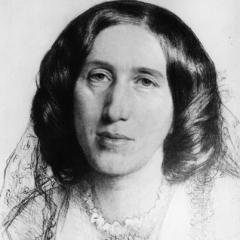
George Eliot
George Eliot

George Eliot, born Mary Ann Evans, was a renowned 19th-century British novelist. Her works are known for their profound psychological insights and critical exploration of social issues. With her unique narrative techniques and rich emotional expression, she has had a profound impact on literature. more

You May Also Like

“Dumas has a truly clear understanding of the human mind. What does everyone desire, and desire more fervently the more wretched and unfortunate they are? To earn money easily, to have power (the enormous pleasure in commanding and humiliating your fellow man) and to avenge every wrong suffered (everyone in life has suffered at least one wrong, however small it might be). And that is why in Monte Cristo he shows us how to amass great wealth, enough to give you superhuman power, and how to make your enemies pay back every debt. But why, everybody asks, am I not blessed by fortune (or at least not as blessed as I would like to be)? Why have I not been favored like others who are less deserving? No one believes their misfortunes are attributable to any shortcomings of their own; that is why they must find a culprit. Dumas offers, to the frustration of everyone (individuals as well as countries), the explanation for their failure. It was someone else, on Thunder Mountain, who planned your ruin.”

“His mouth left her lips, traveling with a trail of fire down her neck to her breast, and breathlessly Nicole whispered, "Don't, please, Christopher, don't do this to me." He stopped and stared up at her, beguiled and enchanted by the beautiful features so near him. "Stop?" he muttered thickly. "I cannot. You say you do not want me. But you lie, Nicole, you have always lied. If you did not want me, this would not happen." - Nicole & Christopher”

“You are like me, you will die too, but not today: you, incommensurate, therefore the hours shine: if I say to you “To you I say,” you have not been set to music, or broadcast live on the ghost radio, may never be an oil painting or Old Master’s charcoal sketch: you are a concordance of person, number, voice, and place, strawberries spread through your name as if it were budding shrubs, how you remind me of some spring, the waters as cool and clear (late rain clings to your leaves, shaken by light wind), which is where you occur in grassy moonlight: and you are a lily, an aster, white trillium or viburnum, by all rights mine, white star in the meadow sky, the snow still arriving from its earthwards journeys, here where there is no snow (I dreamed the snow was you, when there was snow), you are my right, have come to be my night (your body takes on the dimensions of sleep, the shape of sleep becomes you): and you fall from the sky with several flowers, words spill from your mouth in waves, your lips taste like the sea, salt-sweet (trees and seas have flown away, I call it loving you): home is nowhere, therefore you, a kind of dwell and welcome, song after all, and free of any eden we can name.”