Quotessence
Home / Quotes / Quote by C.P. Cavafy

Quote by C.P. Cavafy

“What shall become of us without any barbarians? Those people were a kind of solution.”

Quote by C.P. Cavafy

Author
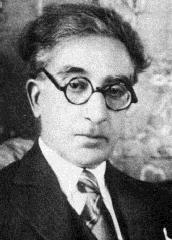
C.P. Cavafy
C.P. Cavafy

C.P. Cavafy, born Konstantinos Petrou Kavafis, was a prominent Greek poet known for his profound philosophical thoughts and rich historical background. His poetry, which is highly regarded as one of the most important of the 20th century, explores themes such as the meaning of human existence, love, history, and religion. Cavafy was born in Alexandria, Egypt, and his family was of Greek descent. He spent part of his childhood in Egypt and later moved to England to complete his education. Upon returning to Alexandria, he became a banker, but his main interest lay in literature and art. more

You May Also Like

“Behave when away from home as though you were in the presence of an honored guest. Employ the people as though you were assisting at an important sacrifice. Do not do to others what you would not like yourself. Then there will be no feelings of opposition to you, whether it is the affairs of a state that you are handling or the affairs of a family.”

“The Internet is a giant international network of intelligent, informed computer enthusiasts, by which I mean, "people without lives." We don't care. We have each other.... While you are destroying your mind watching the worthless, brain-rotting drivel on TV, we on the Internet are exchanging, freely and openly, the most settings, uninhibited, intimate and, yes, shocking details about our "CONFIG.SYS."”

“There is an island fantasy A "Someday I'll," we'll never see When recession stops, inflation ceases Our mortgage is paid, our pay increases That Someday I'll where problems end Where every piece of mail is from a friend Where the children are sweet and already grown . . . . Most unhappy people . . . put happiness on "law away" And struggle through a blue today . . . . Life's most important revelation Is that the journey means more than the destination . . .”