“All I ever aim to do is to put the Development hypothesis in the same coach as the creation one. It will only be a question of who is to ride outside & who in after all.”
Quote by Joseph Dalton Hooker
Author
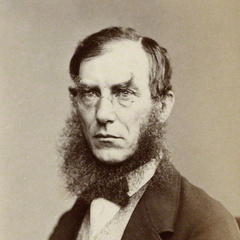
Joseph Dalton Hooker
Joseph Dalton Hooker was a British botanist born on June 30, 1817, and died on December 10, 1911. He is renowned for his contributions to plant taxonomy and plant geography, serving as the director of the Royal Botanic Gardens, Kew, and participating in several scientific expeditions. more
You May Also Like
Source: The History of Creation: Or The Development of the Earth and Its Inhabitants by the Action of Natural Causes. A Popular Exposition of the Doctrine of Evolution in General, and of that of Darwin, Goethe, and Lamarck in Particular. From the 8th German Ed. of Ernst Haeckel ... The Translation Rev. by E. Ray Lankester
Source: The Evolution Theory
Source: The Evolution Theory
Source: Siluria the History of the Oldest Known Rocks Containing Organic Remains, with a Brief Sketch of the Distribution of Gold Over the Earth by Roderick Impey Murchison
Source: Chance and necessity: an essay on the natural philosophy of modern biology
“Evolution on the large scale unfolds, like much of human history, as a succession of dynasties.”
“Evolution... is the most powerful and the most comprehensive idea that has ever arisen on Earth.”