Quotessence
Home / Quotes / Quote by Jean-Baptiste Lamarck

Quote by Jean-Baptiste Lamarck

“In every animal which has not passed the limit of its development, a more frequent and continuous use of any organ gradually strengthens, develops and enlarges that organ, and gives it a power proportional to the length of time it has been so used; while the permanent disuse of any organ imperceptibly weakens and deteriorates it, and progressively diminishes its functional capacity, until it finally disappears.”

Quote by Jean-Baptiste Lamarck

Author
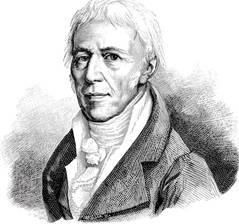
Jean-Baptiste Lamarck

Jean-Baptiste Lamarck was a French naturalist and biologist, a key figure in the history of science. Born on August 1, 1744, in Bazentin, Oise, France, and died on December 18, 1829, in Paris, France. He is known for his contributions to the theory of evolution, particularly his theory of inheritance of acquired characteristics, which suggested that an organism could pass on traits acquired during its lifetime to its offspring. Although his theories are now considered outdated, they laid the groundwork for the modern understanding of evolution. more

You May Also Like

“For in disease the most voluntary or most special movements, faculties, etc., suffer first and most, that is in an order the exact opposite of evolution. Therefore I call this the principle of Dissolution.”

“However, if we consider that all the characteristics which have been cited are only differences in degree of structure, may we not suppose that this special condition of organization of man has been gradually acquired at the close of a long period of time, with the aid of circumstances which have proved favorable? What a subject for reflection for those who have the courage to enter into it!”

“I am above the forest region, amongst grand rocks & such a torrent as you see in Salvator Rosa's paintings vegetation all a scrub of rhodods. with Pines below me as thick & bad to get through as our Fuegian Fagi on the hill tops, & except the towering peaks of P. S. that, here shoot up on all hands there is little difference in the mt scenery—here however the blaze of Rhod. flowers and various colored jungle proclaims a differently constituted region in a naturalists eye & twenty species here, to one there, always are asking me the vexed question, where do we come from?”

“I have devoted my whole life to the study of Nature, and yet a single sentence may express all that I have done. I have shown that there is a correspondence between the succession of Fishes in geological times and the different stages of their growth in the egg,-this is all. It chanced to be a result that was found to apply to other groups and has led to other conclusions of a like nature.”

“It is, however, a most astonishing but incontestable fact, that the history of the evolution of man as yet constitutes no part of general education. Indeed, our so-called "educated classes" are to this day in total ignorance of the most important circumstances and the most remarkable phenomena which Anthropogeny has brought to light.”

“Man has risen, not fallen. He can choose to develop his capacities as the highest animal and to try to rise still farther, or he can choose otherwise. The choice is his responsibility, and his alone. There is no automatism that will carry him upward without choice or effort and there is no trend solely in the right direction. Evolution has no purpose; man must supply this for himself. The means to gaining right ends involve both organic evolution and human evolution, but human choice as to what are the right ends must be based on human evolution.”

“Man is a megalomaniac among animals-if he sees mountains he will try to imitate them by pyramids, and if he sees some grand process like evolution, and thinks it would be at all possible for him to be in on that game, he would irreverently have to have his whack at that too. That daring megalomania of his-has it not brought him to his present place?”