“Any classification according to a singular identity polarizes people in a particular way, but if we take note of the fact that we have many different identities - related not just to religion but also to language, occupation and business, politics, class and poverty, and many others - we can see that the polarization of one can be resisted by a fuller picture. So knowledge and understanding are extremely important to fight against singular polarization.”
Quote by Amartya Sen
Author
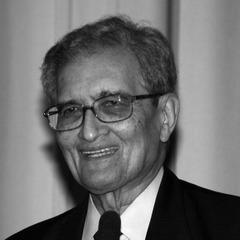
Amartya Sen
Amartya Sen is an Indian economist renowned for his contributions to welfare economics, development economics, and ethics. He won the Nobel Prize in Economics in 1979 and is considered one of the most outstanding economists of the 20th century. more
You May Also Like
Source: Complete Works of Aristotle, Volume 1: The Revised Oxford Translation
“All teaching and all intellectual learning come about from already existing knowledge.”
Source: The Complete Works of Aristotle: The Revised Oxford Translation, One-Volume Digital Edition
Source: The Metaphysics ...: with an English translation by Hugh Tredennick
“If you know anything better than this candidly impart it; if not, use this with me.”