“But when a man draws a lifeless thing into his passionate longing for dialogue, lending it independence and as it were a soul, then there may dawn in him the presentiment of a world-wide dialogue with the world-happening that steps up to him even in his environment, which consists partially of things. Or do you seriously think that the giving and taking of signs halts on the threshold of that business where an honest and open spirit is found?”
Quote by Martin Buber
Work
Great twentieth century Jewish philosophers: Shestov, Rosenzweig, Buber, with selections from their writings
Great Twentieth Century Jewish Philosophers is a compilation that delves into the philosophical works of three significant Jewish thinkers from the 20th century: Lev Shestov, Franz Rosenzweig, and Martin Buber. The book offers extracts from their writings, allowing readers to engage with their key concepts and theories. It serves as a comprehensive introduction to the philosophical contributions of these thinkers within the context of Jewish philosophy. more
Author
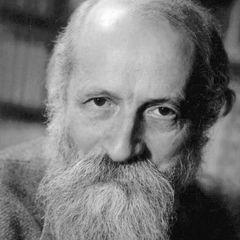
Martin Buber
Martin Buber was a German philosopher known for his profound insights into human relationships. His work 'I and Thou' explored the direct relationship between individuals, which had a profound impact on existentialism and philosophical anthropology. more
You May Also Like
Source: Flow: the psychology of optimal experience
“I am an exile; citizen of the country of longing.”
Source: Maximum city: Bombay lost and found