Quotessence
Home / Quotes / Quote by Paul Brand

Quote by Paul Brand

“In a consumer society, expectations dare not plateau, because a growing economy depends on rising expectations... The more we let our level of contentment be determined by outside factors-a new car, fashionable clothes, a prestigious career, social status-the more we relinquish control over our own happiness.”

Quote by Paul Brand

Author
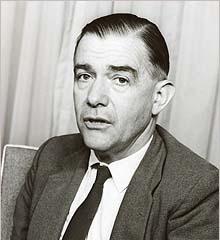
Paul Brand
Paul Brand

Paul Brand was an accomplished autobiographer known for his profound insights into medicine and anthropology. His works often focused on ethical issues in medical practice and the interrelation between human behavior and culture. more

You May Also Like

“Many of our miseries are merely comparative: we are often made unhappy, not by the presence of any real evil, but by the absence of some fictitious good; of something which is not required by any real want of nature, which has not in itself any power of gratification, and which neither reason nor fancy would have prompted us to wish, did we not see it in the possession of others.”

“Plenty is the original cause of many of our needs; and even the poverty, which is so frequent and distressful in civilized nations, proceeds often from that change of manners which opulence has produced. Nature makes us poor only when we want necessaries; but custom gives the name of poverty to the want of superfluities.”

“Roughly two billion people participate in the money economy, with less than half of those living in the wealthy countries of the developed world. These affluent 800 million, however, account for more than 75 percent of the world's energy and resource consumption, and also create the bulk of its industrial, toxic, and consumer waste.”

“Sufficient for the day is all that we can enjoy. We cannot eat or drink or wear more than the day's supply of food and raiment; the surplus gives us the care of storing it, and the anxiety of watching against a thief. One staff aids a traveller, but a bundle of staves is a heavy burden. Enough is not only as good as a feast, but is all that the greatest glutton can truly enjoy. This is all that we should expect; a craving for more than this is ungrateful. When our Father does not give us more, we should be content with his daily allowance.”

“That the happiness of man may still remain imperfect, as wants in this place are easily supplied, new wants likewise are easily created; every man, in surveying the shops of London, sees numberless instruments and conveniencies, of which, while he did not know them, he never felt the need; and yet, when use has made them familiar, wonders how life could be supported without them. Thus it comes to pass, that our desires always increase with our possessions; the knowledge that something remains yet unenjoyed, impairs our enjoyment of the good before us.”

“The money economy thus leaves a large ecological footprint, defined as the amount of land and resources required to meet a typical consumer's needs. For example, with only about 4% of the world's population, the United States, the largest money economy, consumes in excess of one-quarter of the world's energy and materials and generates in excess of 25 percent of the world's greenhouse gas emissions.”

“To me, an economy that sees the life of a community or a place as expendable, and reckons its value only in terms of money, is not acceptable because it is not realistic. I am thinking as I believe we must think if we wish to discuss the best uses of people, places, and things, and if we wish to give affection some standing in our thoughts.”