Quotessence
Home / Quotes / Quote by Charles Spurgeon

Quote by Charles Spurgeon

“Sufficient for the day is all that we can enjoy. We cannot eat or drink or wear more than the day's supply of food and raiment; the surplus gives us the care of storing it, and the anxiety of watching against a thief. One staff aids a traveller, but a bundle of staves is a heavy burden. Enough is not only as good as a feast, but is all that the greatest glutton can truly enjoy. This is all that we should expect; a craving for more than this is ungrateful. When our Father does not give us more, we should be content with his daily allowance.”

Quote by Charles Spurgeon

Work

Morning and Evening

The title Morning and Evening suggests a structure or thematic concern with binary oppositions and daily rhythms. In literary and philosophical traditions, the pairing of morning and evening frequently serves as a metaphor for the span of human life, with morning representing youth, beginnings, and potential, while evening signifies maturity, endings, and reflection. The work may explore how human consciousness experiences and interprets these temporal divisions, or it may use the framework of a single day to examine broader existential questions. Without more specific identifying information, the content remains open to interpretation, though the title itself invokes the universal experience of diurnal cycles and the cultural meanings attached to different times of day across various societies and historical periods. more

Author

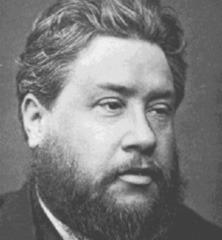
Charles Spurgeon
Charles Spurgeon

Charles Haddon Spurgeon, born on June 19, 1834, was a prominent Christian preacher from the United Kingdom. Known as the 'Preacher of London,' he was renowned for his passionate sermons and profound influence. Spurgeon's preaching drew thousands of listeners, and his writings had a widespread impact on the Christian world. more

You May Also Like

“That the happiness of man may still remain imperfect, as wants in this place are easily supplied, new wants likewise are easily created; every man, in surveying the shops of London, sees numberless instruments and conveniencies, of which, while he did not know them, he never felt the need; and yet, when use has made them familiar, wonders how life could be supported without them. Thus it comes to pass, that our desires always increase with our possessions; the knowledge that something remains yet unenjoyed, impairs our enjoyment of the good before us.”

“The money economy thus leaves a large ecological footprint, defined as the amount of land and resources required to meet a typical consumer's needs. For example, with only about 4% of the world's population, the United States, the largest money economy, consumes in excess of one-quarter of the world's energy and materials and generates in excess of 25 percent of the world's greenhouse gas emissions.”

“To me, an economy that sees the life of a community or a place as expendable, and reckons its value only in terms of money, is not acceptable because it is not realistic. I am thinking as I believe we must think if we wish to discuss the best uses of people, places, and things, and if we wish to give affection some standing in our thoughts.”

“Water and petrol both come from the earth, and though they seem to be alike and even the same, they are in nature and purpose exact opposites, for the one extinguishes fire and the other adds fuel to it. So also the world and its treasures, the heart and its thirst for God are alike His creation. Now the result of the attempt to satisfy the heart with the wealth and pride and honours of this world is the same as if one tried to put out a fire with petrol, for the heart can only find ease and satisfaction in Him who created both it and the longing desire of which it is conscious.”

“We are a material-mad race of people. Build, increase, expand, pile up, hoard! More and more and more. "If we can just make enough money to-to- !" Jesus said: "Sell what ye have, and give alms; provide yourselves bags which wax not old, a treasure in the heavens that faileth not, where no thief approacheth, neither moth corrupteth."”

“Wild animals never kill for sport. Man is the only one to whom the torture and death of his fellow creatures is amusing in itself.”